
Nebius Robotics Strategy
Nebius robotics exposure: NVIDIA tools and the Living Lab, Avride's commercial service, funding qualifications and the separate economic tests.
In this article
Nebius has two distinct routes into robotics: supplying cloud infrastructure and tools to robotics developers, and holding an interest in Avride, which develops autonomous cars and delivery robots. The first earns through computing services. The second depends on an operating autonomy business and its ownership and funding structure.
There is now more concrete evidence behind the cloud offering than the original article's discussion of trademarks and possible future products. Nebius has announced a robotics platform with NVIDIA and a Physical AI Living Lab. Avride also has commercial activity with Uber. None of those facts establishes a profitable, fully driverless fleet or a single integrated robotics business.
What physical AI requires
A physical system must sense its surroundings, choose an action and carry it out. Developers use simulation, synthetic data and training to improve those choices before deploying them into the world. The operating system then encounters conditions that a simulation may not have represented well.
Cloud compute supports the development cycle, but the deployed machine still has its own hardware, maintenance and operating constraints. This is why a growing robotics market can create cloud demand without guaranteeing that one cloud provider captures the whole economic opportunity.
The NVIDIA platform is a disclosed product direction
In March, Nebius announced a cloud platform for robotics and physical AI, integrating NVIDIA's Physical AI Data Factory Blueprint. The announcement names early users and work on simulation and synthetic-data workflows.
This provides a stronger basis for analysis than inferring a product from a trademark filing. A trademark can reserve a name across broad categories without identifying a launched service, a signed customer or earned revenue. This refresh therefore removes the earlier emphasis on TERESTRA as evidence of an operating umbrella business.
The value proposition is practical: developers can assemble data and computing workflows with less infrastructure work of their own. The proof will come from continuing usage, customer outcomes and the cost of delivering those workflows.
The Physical AI Living Lab
The June Living Lab announcement describes a six-month programme for UK and European startups, with its first cohort scheduled for September 2026. It combines UK-based Nebius infrastructure with NVIDIA simulation and robotics tools and engineering support.
The programme creates opportunities to work directly with developers. Its launch schedule does not prove that a cohort has finished, that its members are paying commercial rates, or that their robots are deployed at scale. Those are subsequent milestones.
Avride: the commercial record
Uber launched Avride rides in Dallas on December 3, 2025. The launch announcement explicitly included an on-board specialist behind the wheel. Uber's current Dallas service page continues to describe matching eligible trips with Avride vehicles and identifies service across Central Dallas north of the Trinity River.
That establishes public commercial availability. It does not establish that every ride is fully driverless. The supervision arrangement, operating area and service conditions must be verified for the period being discussed rather than inferred from the word "robotaxi".
Avride also develops delivery robots. Its company site describes shared technology across the vehicle and robot platforms. Passenger rides, delivery orders and test miles are different activity measures. Adding them together would not produce a meaningful market-share or safety statistic.
The funding language matters
The October 2025 funding announcement describes up to $375 million of strategic investment and other commitments from Uber and Nebius. The old article compressed that into a completed $375 million fundraising round. The disclosed structure is broader and should retain the "up to" qualification.
Nor should an old ownership percentage be treated as permanent. New funding, options and other instruments can alter the economic interest. The relevant percentage for a valuation needs the reporting date and instrument terms, not a number repeated from an earlier article.
How the economics should be tested
Exposure | Evidence of progress | Unanswered economic question |
|---|---|---|
Robotics cloud | Disclosed tools, customers and programmes | Recurring paid usage and contribution after infrastructure costs |
Avride passenger service | Commercial trips and geographic availability | Cost per trip after supervision, fleet and operating expenses |
Delivery robots | Completed deliveries and platform partnerships | Revenue per delivery, utilization and servicing cost |
Group investment | Ownership and financing disclosures | Value attributable to Nebius after outside capital and future funding |
These measures keep useful activity separate from shareholder value. More rides can be progress while the business still needs funding. Better simulation can help a developer without giving Nebius ownership of that developer's robot or its eventual revenue.
The original ClickHouse comparison is retained below as a historical illustration. It is not liquid cash available to fund Avride, and its quoted valuation and ownership assumptions have not been refreshed here.
Follow the two stories separately
For cloud adoption, watch disclosed robotics workloads, repeat customers and evidence of a differentiated service. For Avride, watch the supervision model, service territory, fleet utilization, safety disclosures and financing. A claim that the two businesses reinforce each other should identify the actual commercial or technical connection.
The Nebius software analysis explains the cloud platform, and the company guide puts Avride among the group's other businesses. The Nebius company page is the route to the broader research and dated models.
Historical calculations retained from the original study
The following limited examples are preserved from the original publication. Their assumptions and outputs have not been revised. They are not current operating measurements, a new Northwise forecast or a statement of current contracted prices. The factual discussion above uses the latest reviewed evidence.
The original ClickHouse comparison uses an approximate stake and a reported financing valuation. That is a historical investment illustration, not cash available to spend, a realizable sale price or a current group ownership schedule.
In addition, Nebius maintains strategic holdings such as its stake in ClickHouse, whose most recent funding round reportedly valued the company at $15B. With an approximate 25% stake, that position alone implies multi-billion-dollar asset backing. Avride remains majority owned. TripleTen and Tavily are fully owned.
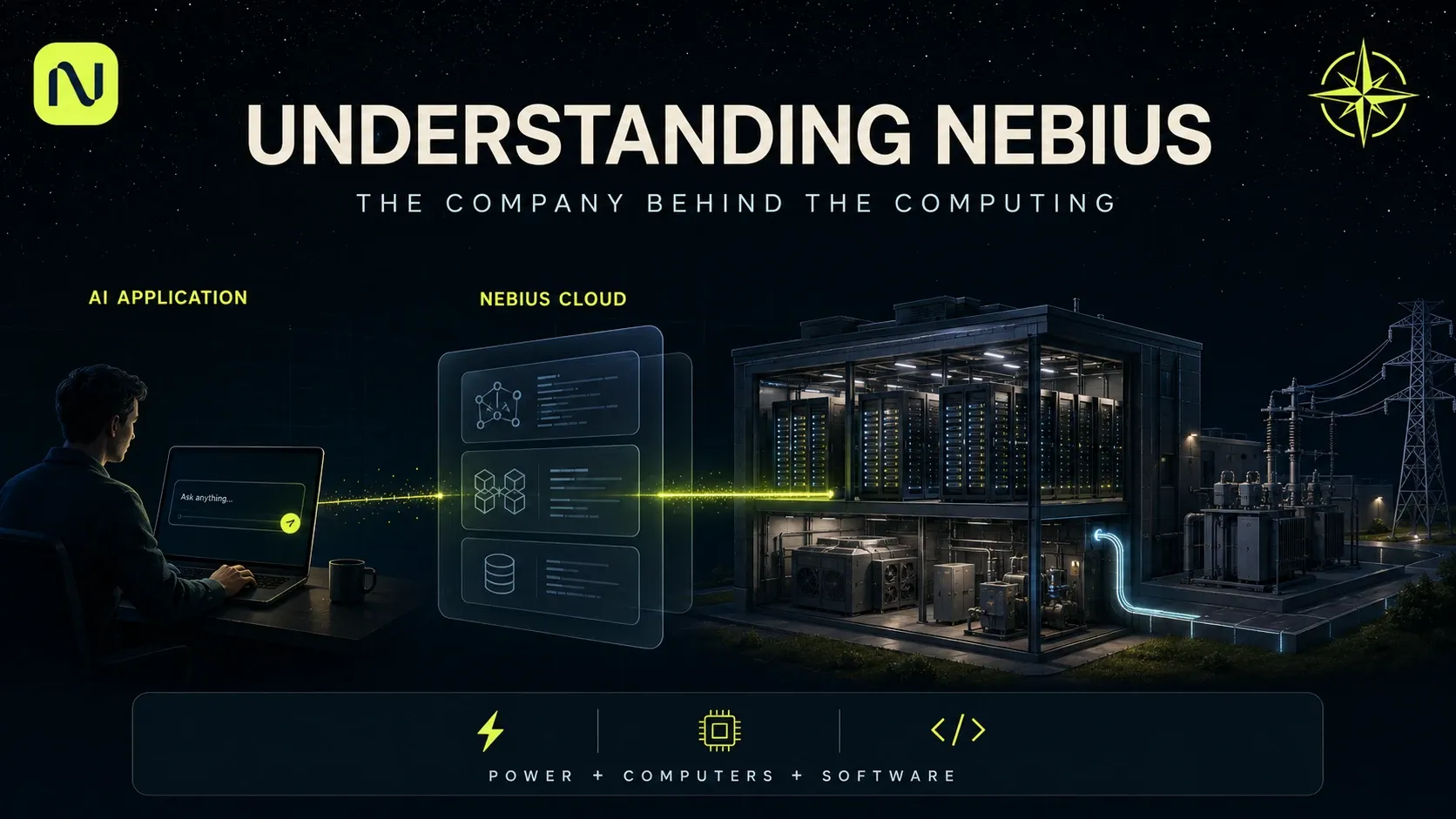
Understanding Nebius: A Complete Guide to the Company
Understand Nebius from the ground up: its AI cloud, competitors, subsidiaries, funding, and growth opportunities. A complete NBIS guide with 14 illustrations.
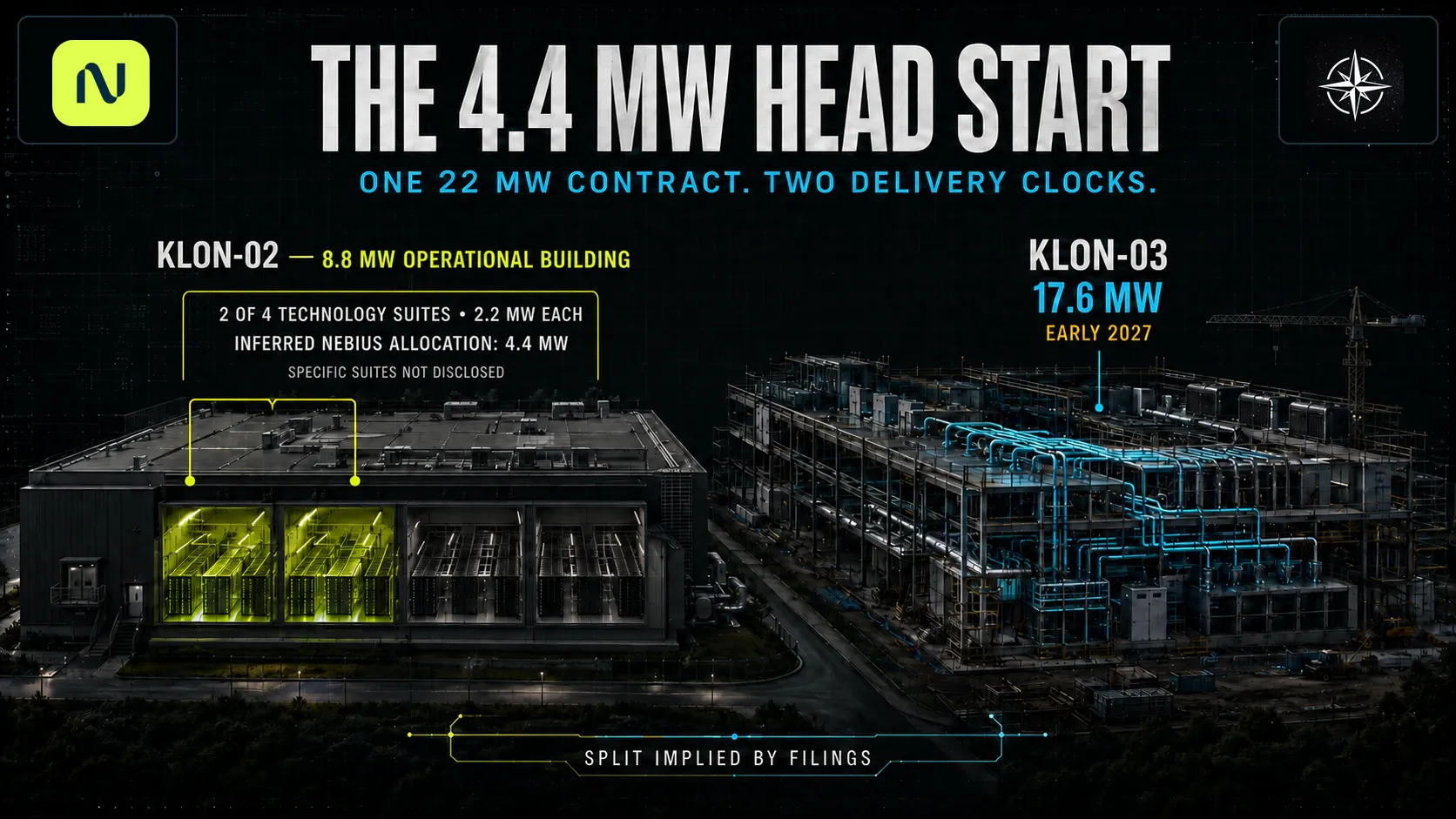
Nebius in Europe: Sovereign AI, UK Expansion and Harlow
How European AI sovereignty supports Nebius’s UK expansion, where Harlow fits, and what its potential 4.4 MW deployment could add to Q3 revenue and 2026 ARR.
NBIS Stock Forecast 2030: The Conversion Problem
A ground-up Nebius model rebuild after Q2 2026, covering AI factory economics, capital structure, valuation scenarios, and the NBIS stock forecast to 2030.
Northwise Portfolios
See how the research becomes real decisions
Reader discussion
Discuss the research
Create a Free account to join the discussion with a display name.
Create a Free Account
No comments yet. Start a thoughtful discussion.