
NBIS Stock Software Analysis

Nebius's software platform: Aether 3.6, Token Factory, inference acquisitions, pricing boundaries and the new Palantir relationship.
In this article
Nebius sells more than access to a GPU. Customers also need storage, networking, workload management, model deployment and a way to operate the service reliably. Software connects those pieces and influences how much useful work a customer gets from the equipment.
The current platform story includes Aether 3.6, Token Factory, the completed Eigen AI acquisition, Clarifai's joining team and licensed technology, and the new Palantir distribution relationship. These are different kinds of progress. A product release, an acquisition and a partnership should not all be treated as immediately earned revenue.
Start with useful work
A training job can spend time waiting for data, exchanging information between machines or recovering from interruption. An inference service can produce fast average responses while still failing a customer's requirements for its slowest requests. The economically relevant outcome is useful work completed at the required quality and reliability, after paying for the resources and people needed to deliver it.
That is the reason software matters to an infrastructure investor. Better scheduling or recovery can improve the productivity of an installation without adding another building. But a benchmark gain does not automatically translate into the same percentage improvement in company margin. Workload mix, pricing, utilization and engineering costs sit between the two.
The platform layers
Layer | Customer problem | What an investor should examine |
|---|---|---|
Compute and networking | Obtain machines that work together | Availability, workload performance and effective cost |
Storage and data movement | Feed jobs and retain their data | Throughput, durability, transfer costs and capacity |
Orchestration | Launch, schedule and recover work | Setup effort, failure recovery and wasted resources |
Managed inference | Put a model behind a production service | Response quality, latency, reliability and serving cost |
Governance and access | Operate safely across a team | Permissions, auditability and enterprise adoption |
This is an analytical framework, not a claim that any provider has solved each problem better than every competitor. A comparison needs the actual service, workload and commercial terms.
What Aether 3.6 adds
Nebius's June release introduced Echo, an agent in the console for questions and core infrastructure operations, alongside governance, security and storage improvements. The preceding 3.5 release introduced serverless capabilities and additional GPU options.
These features aim to reduce the work between deciding to run a task and actually running it. For a customer, that can mean fewer separate tools or less manual setup. For Nebius, the opportunity is a service that becomes useful throughout the customer's development cycle. The cost is that the provider must support more of that cycle.
Ease of use is not a substitute for reliability. A convenient interface can help adoption, but the underlying jobs still need to finish and the controls still need to behave as intended.
Token Factory and the inference acquisitions
Token Factory's documentation describes managed inference and fine-tuning through an OpenAI-compatible API. Its current documentation also covers observability, structured outputs, tools and access management. The service gives an application team a different entry point from renting and operating an entire GPU cluster itself.
Nebius completed the Eigen AI acquisition on June 10, announcing completion on June 16. Eigen contributes inference and model-optimization capabilities. The Clarifai transaction is described differently: a core engineering and research team joined Nebius, and Nebius agreed to license inference and orchestration technology. Calling that a purchase of the entire Clarifai company would misstate the disclosed structure.
Model optimization and system optimization can reinforce each other. The model determines what work must be performed; the serving system determines how that work is scheduled and delivered. The commercial test is whether the resulting service wins sustained, profitable usage.
Pricing needs the full service boundary
The old storage table is replaced by a link to current Nebius pricing. The schedule distinguishes storage classes, durability configurations, on-demand and preemptible GPU usage, and negotiated commitments. Its standard object-storage transfer charge differs from the free-egress treatment shown for some other storage classes.
Consequently, "free egress" is too broad as a description of every storage product. A comparison should specify the service, stored volume, transfer pattern, availability requirements and workload duration. The cheapest listed unit can become a poor choice if it increases idle GPU time or does not provide the required durability.
The Palantir relationship
The September 8 partnership names Nebius as Palantir's preferred sovereign AI infrastructure partner. Following integration, eligible customers are intended to access Nebius compute and inference inside the Palantir environment.
That adds a route to enterprise customers. The announcement does not specify a booked revenue amount or demonstrate utilization at a particular campus. Integration, customer adoption and paid workloads remain the steps that turn a distribution agreement into operating results.
What would support the software investment case
Look for customers using several platform services, sustained inference activity, reliable production operation and evidence that the cost of supporting customers grows more slowly than the value they generate. Treat benchmark results as workload-specific evidence and management's product claims as claims that need commercial validation.
The earlier article grouped CoreWeave, IREN and Cipher together as generic GPU landlords. That comparison obscured different business models. Cipher's campus leases, IREN's infrastructure and AI-cloud activities, and CoreWeave's cloud services do not create identical exposures or cost structures.
For the physical footprint behind the platform, use the Nebius site overview and Data Center Tracker. The complete company guide connects software, capital spending and valuation, while Nebius coverage collects the model reports.
Historical calculations retained from the original study
The following limited examples are preserved from the original publication. Their assumptions and outputs have not been revised. They are not current operating measurements, a new Northwise forecast or a statement of current contracted prices. The factual discussion above uses the latest reviewed evidence.
The original early-versus-scaled economics table is an illustrative framework. Its directional assumptions are not new guidance or proof that capital intensity or cost per token has followed that path.
Economic Variable | Early Build Phase | Scaled Execution Phase |
|---|---|---|
Capex Intensity | High | Moderating |
Marginal Cost per Token | Elevated | Declining |
Utilization Sensitivity | High | Compounding |
EBITDA Contribution | Volatile | Expanding |
Revenue Driver | Capacity additions | Throughput per GPU |
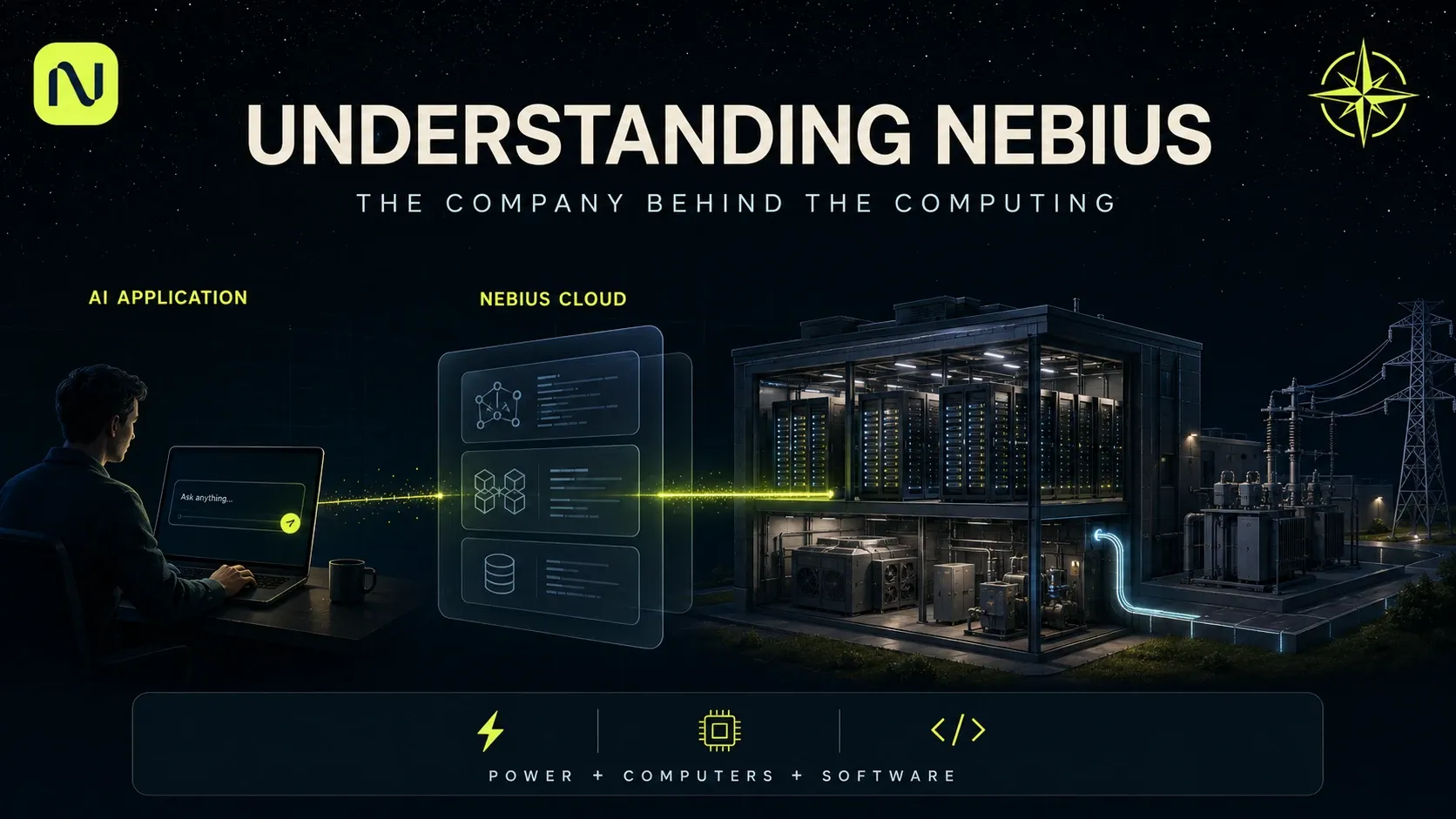
Understanding Nebius: A Complete Guide to the Company
Understand Nebius from the ground up: its AI cloud, competitors, subsidiaries, funding, and growth opportunities. A complete NBIS guide with 14 illustrations.
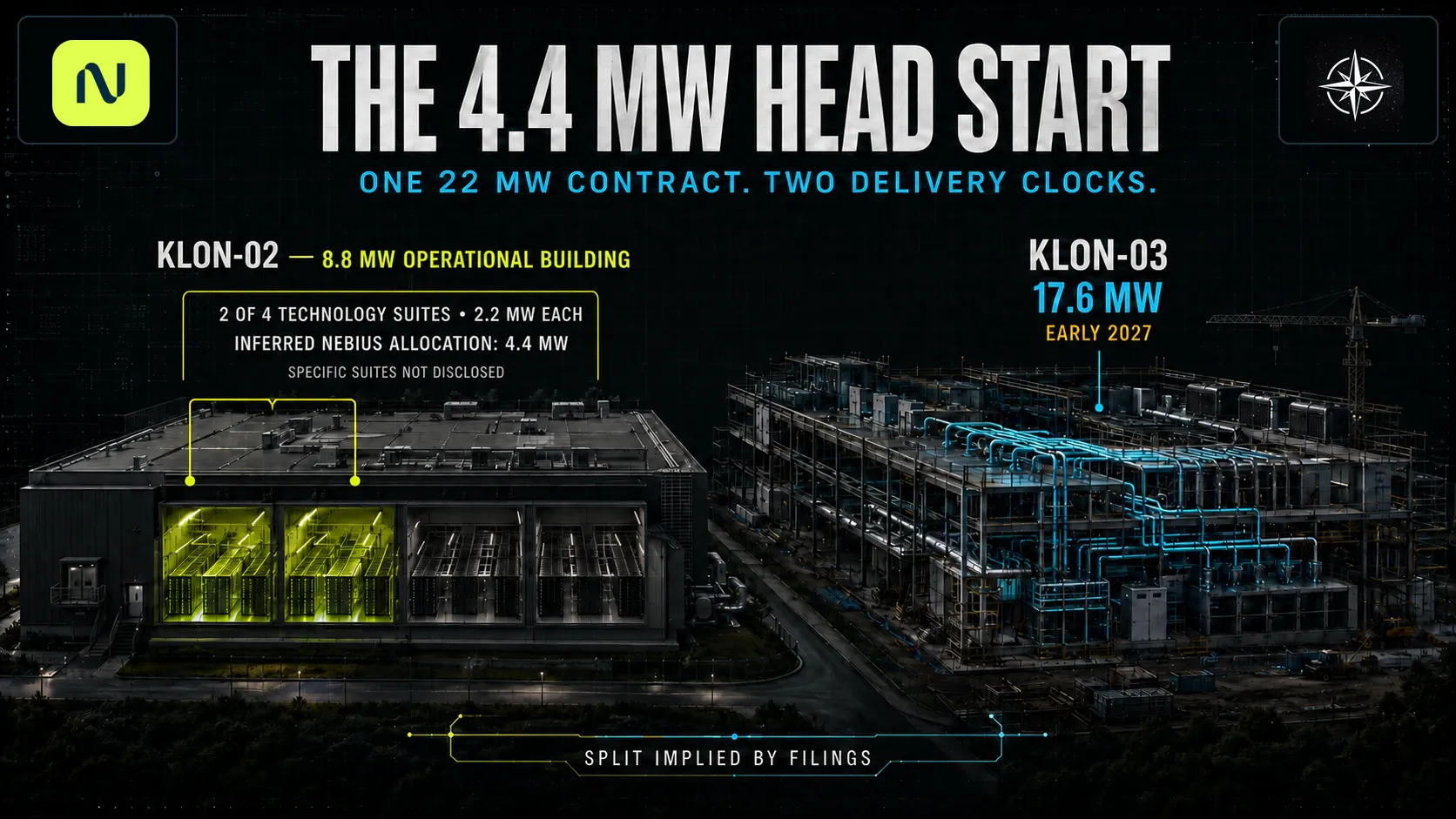
Nebius in Europe: Sovereign AI, UK Expansion and Harlow
How European AI sovereignty supports Nebius’s UK expansion, where Harlow fits, and what its potential 4.4 MW deployment could add to Q3 revenue and 2026 ARR.
NBIS Stock Forecast 2030: The Conversion Problem
A ground-up Nebius model rebuild after Q2 2026, covering AI factory economics, capital structure, valuation scenarios, and the NBIS stock forecast to 2030.
Northwise Portfolios
See how the research becomes real decisions
Reader discussion
Discuss the research
Create a Free account to join the discussion with a display name.
Create a Free Account
No comments yet. Start a thoughtful discussion.