
MercadoLibre Stock Forecast 2030

MercadoLibre Stock Forecast 2030 explores why MELI is more than ecommerce. It's building Latin America's vertically integrated digital backbone.
In this article
MercadoLibre Stock Forecast 2030: Latin America’s Digital Backbone in the Making
MercadoLibre is building the digital, financial, and logistical backbone of Latin America. It’s being valued like a retailer, but operating like a regional infrastructure layer.
Is MercadoLibre Stock a Buy Right Now?
MercadoLibre is not simply Latin America’s answer to Amazon. It is a structurally unique, regionally entrenched digital platform with an economic flywheel that stretches across commerce, finance, and infrastructure. And yet, despite record-setting growth and increasingly diversified revenue streams, the company remains misunderstood by most global investors.
In a market dominated by U.S.-centric portfolios and tech multiples tethered to narratives rather than structure, we believe MercadoLibre represents one of the clearest asymmetric opportunities available to long-term investors today.
Financial Strength Meets Strategic Discipline
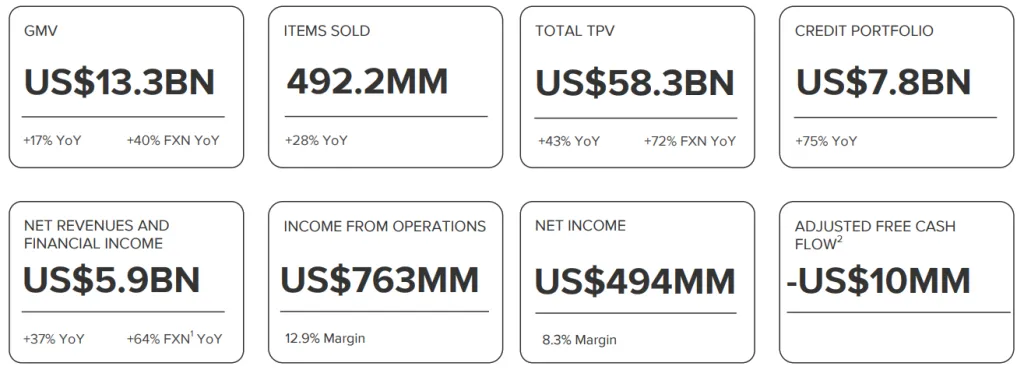
MercadoLibre’s Q1 2025 results reflected a company firing on all operational engines. Growth wasn’t limited to top-line metrics; it extended through earnings, margins, and regional reinvestment. These numbers point not just to scale, but to real structural momentum in markets often perceived as unstable.
Here’s how Q1 2025 landed:
- Revenue: $5.9 billion (+37% YoY)
- Net income: $494 million (+44% YoY)
- EPS: $9.74
- GMV: $13.3 billion (+17% in USD, +40% FX-neutral)
- EBIT margin: 12.9%
What’s most impressive isn’t just the scale, but the operational leverage. While many peers are cutting headcount or burning cash to maintain momentum, MercadoLibre is expanding its workforce, building infrastructure, and self-funding growth.
In 2025 alone, MercadoLibre is deploying $5.8 billion in Brazil to build some of its most advanced logistics hubs to date, aiming to overcome last-mile delivery challenges in a country known for its geographic and infrastructure complexity.
In Mexico, it is investing $3.4 billion to expand the company’s fintech and payments footprint while scaling hiring efforts to support operational depth and product growth.
In Argentina, the $2.6 billion commitment reflects a strategic choice to double down on fulfillment, marketing, and regional commerce infrastructure in its home market at a time when many are pulling back. This blend of conviction and regional experience reinforces MercadoLibre’s long-view advantage.
Leadership That Builds Quietly
Founder and CEO Marcos Galperin has led the company since its inception in 1999. Galperin holds an MBA from Stanford and launched MercadoLibre while still in school, giving him a Silicon Valley mindset paired with an intrinsic understanding of Latin American markets. He has consistently maintained majority control and operational leadership, choosing to reinvest into core infrastructure over short-term optics.

Under Galperin’s direction, MercadoLibre has navigated everything from currency crises to political turnover with a long-term lens. The leadership team has shown unusual consistency for a company of its size, with a strong bench of operators across finance, logistics, and engineering. They’ve also stayed relatively quiet in the public sphere, focusing more on execution than investor storytelling.
This leadership culture is defined by low ego and high conviction. It has allowed MercadoLibre to build in ways that outsiders often underestimate. While other firms pivot under pressure, MELI tends to expand deliberately, compound quietly, and let results do the talking.
A Platform, Not Just a Marketplace
MercadoLibre, similarly to Amazon and Alibaba, operates a five-pillar ecosystem, each business line working together to reinforce network effects, drive monetization, and reduce friction across its user base. Here’s how each segment functions in practice:
Mercado Pago
Mercado Pago began as a checkout solution for the company’s marketplace but has evolved into one of the largest digital wallets and payment platforms in Latin America. It now processes billions in off-platform volume, enabling in-store payments, QR codes, and even P2P transfers.

The company is also expanding into credit cards and investment products as part of its fintech roadmap.
Mercado Envíos
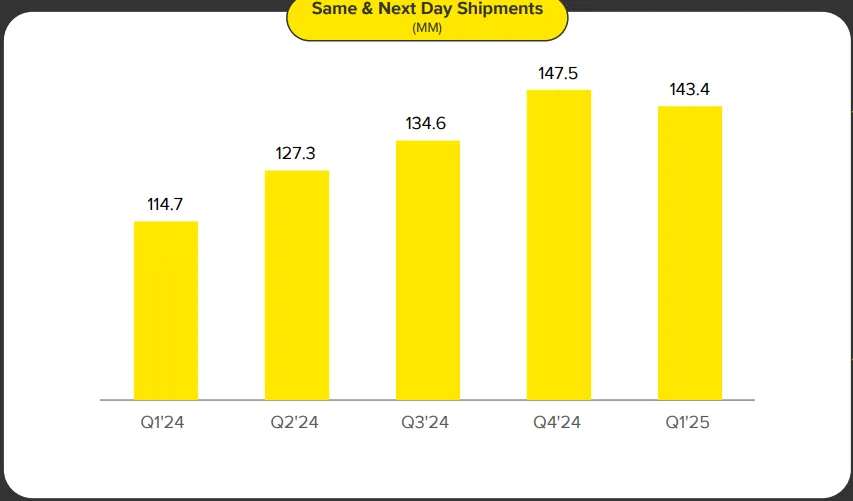
Mercado Envíos is MELI’s vertically integrated logistics operation, controlling first-mile to last-mile delivery across fragmented geographies. It operates hundreds of distribution centers and sortation hubs and is increasingly automating fulfillment. Fast shipping times drive conversion and retention across the platform.
Mercado Ads
Mercado Ads monetizes search and placement on MELI’s marketplace, similar to Amazon’s ad engine. It gives sellers the ability to drive traffic and visibility, while also generating high-margin revenue for the company. This business is growing rapidly and is key to expanding take rate without impacting seller incentives.
Mercado Crédito
Mercado Crédito provides working capital loans to merchants and installment credit to consumers, leveraging platform data to underwrite efficiently.
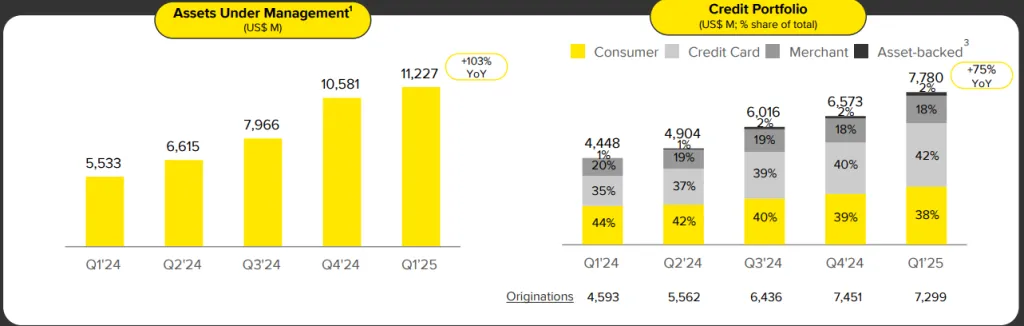
Default rates remain manageable, and the lending book continues to expand as engagement grows. This segment boosts basket size and increases LTV.
Marketplace
The core commerce platform connects buyers and sellers across 18 countries and remains the flywheel for the broader ecosystem. With millions of SKUs and strong brand trust, the marketplace still drives most traffic and transaction flow. Its scale and user base serve as the foundation for MELI’s integrated product stack.
Notable Strategic Investments
MercadoLibre has made several targeted investments that expand its capabilities beyond core operations, especially in areas aligned with the company’s fintech ambitions.
Its 2022 investment in 2TM Group, the parent company of Mercado Bitcoin, gave it a foothold in Brazil’s rapidly growing digital asset space. Mercado Bitcoin is the country’s largest crypto exchange, and this move positioned MercadoLibre to explore blockchain-based services and asset tokenization as part of its broader financial ecosystem.
Alongside that, MercadoLibre invested in Paxos, a U.S.-based blockchain infrastructure firm known for powering stablecoin transactions and crypto settlement for major institutions. The Paxos partnership has enabled Mercado Pago to facilitate crypto buying, selling, and holding within select Latin American markets, offering millions of users access to digital currencies through a trusted regional brand.

In 2024, the company participated in a $55 million funding round for Simetrik, a Colombian fintech startup focused on automated financial reconciliation. While Simetrik is headquartered in Latin America, it already operates in over 30 countries across Asia, Africa, and Europe. This marks MercadoLibre’s first indirect exposure to global fintech infrastructure, showing a willingness to bet on scalable tools that could integrate across MELI’s own back-office stack.
Each of these bets shares a common thread: infrastructure leverage. MercadoLibre isn’t chasing hype. It’s quietly embedding itself deeper into the systems that power digital transactions, regulatory compliance, and financial flows.
International Expansion and Strategic Positioning
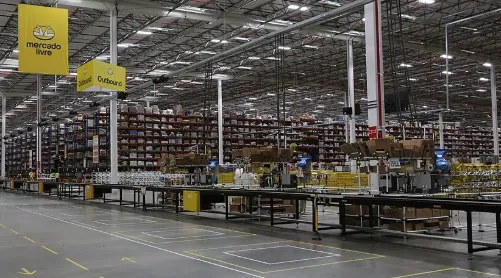
MercadoLibre’s expansion strategy has been methodical and infrastructure-led. The company opened its first fulfillment center outside of Latin America in San Antonio, Texas. While the site is primarily used to support cross-border trade for LatAm customers, it reflects MELI’s increasing logistical sophistication and long-term intent to operate global-grade infrastructure.
In tandem, the company proposed relocating its U.S. legal domicile from Delaware to Texas. This move signals a desire for a more favorable legal and operational framework as MercadoLibre scales its back-end systems and expands partnerships in the United States. It also increases proximity to international talent pools and regulatory ecosystems that are more aligned with cross-border commerce.
While these changes do not reflect an imminent pivot to U.S. consumers, they hint at a longer-term ambition to integrate deeper into the global financial and trade infrastructure. These steps position MELI to operate beyond its domestic borders without taking on the customer acquisition and marketing burdens that typically come with geographic expansion.
Competitive Landscape
MercadoLibre is not alone in its mission to digitize Latin America’s economic infrastructure. It competes directly and indirectly with a growing list of global and regional players.
Nu remains its most visible fintech rival. While NuBank is rapidly scaling financial services with a clean user interface and consumer-first experience, it operates as a lightweight front-end compared to MELI’s vertically integrated stack.
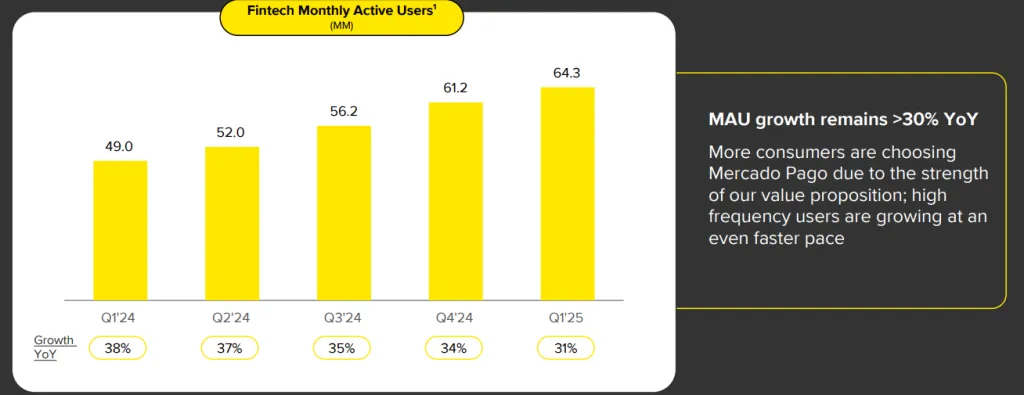
Amazon is another major player expanding across Brazil and Mexico. While Amazon has the global scale and logistics expertise, it has not yet matched MELI’s localized fulfillment capabilities or ecosystem depth.
Shopee, the Southeast Asian e-commerce platform owned by Sea Limited, made a strong push into Latin America but has since retrenched in some markets. Its presence still looms as a potential challenger in lower-cost mobile-first retail.
Other fintech challengers like Ualá, PicPay, and Rappi are chipping away at digital payments and financial services, but most lack the scale, operating leverage, or data advantage that MELI has built over two decades.
In our view, MELI’s greatest competitive strength is its integration. Others may rival it in individual products, but few can compete with the full platform.
What the Market Is Missing
The biggest misunderstanding around MELI is scope. Investors often reduce it to a regional ecommerce story vulnerable to currency risk and political cycles. But that framing overlooks the structural transformation underway.
MercadoLibre is laying foundational digital infrastructure across countries historically underserved by reliable financial and logistical systems. Its ecosystem is built to compound over time, with flywheel effects between commerce, payments, credit, and fulfillment.
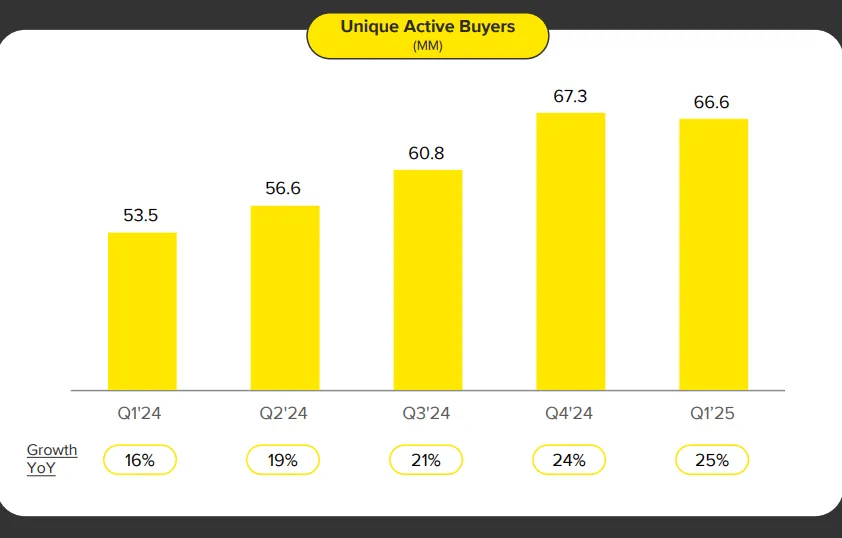
These product lines aren’t operating in isolation. Commerce data fuels underwriting. Payment volume drives monetization. Logistics enables customer stickiness. MELI’s ability to control the stack is being undervalued because of its geography.
Despite emerging market headwinds, MELI delivers margins and reinvestment discipline on par with top-tier global tech firms. The valuation gap between what it builds and what it’s priced for is the core of the opportunity.
In our view, this misread reflects how Wall Street often prices perception over structure. MELI behaves like infrastructure. It gets priced like retail. That gap is where the upside lives.
A Hedge and a Growth Engine
For U.S.-centric portfolios, MELI offers dollar-denominated exposure to low-correlated, high-growth markets with platform economics. There is political and currency risk, but there’s also unmatched upside.
This isn’t just a bet on Latin America. It’s a position that provides both offensive and defensive value. Offensively, MELI offers multi-layered growth across commerce, fintech, and infrastructure.

Defensively, it helps hedge against U.S. tech concentration, interest rate sensitivity, and regulatory risk. As global investors increasingly look for growth that isn’t tied to the same narratives or policy cycles, MELI’s regional independence and reinvestment discipline stand out.
It can play the role of both compounder and ballast in a modern portfolio.
So, Is MercadoLibre Stock a Buy?
In summary of our MercadoLibre stock forecast 2030, we believe it is. MercadoLibre is not only generating high-margin growth across fragmented economies, but also embedding itself into the financial, logistical, and commercial infrastructure of Latin America.
It is the rare company that combines regional dominance with reinvestment discipline and misunderstood optionality. And it is still trading well below the multiples of comparable U.S. tech peers.
MELI’s ecosystem is defensible, data-rich, and compounding in ways the market continues to underappreciate. It benefits from local execution, product adjacency, and category control. It also enjoys structural tailwinds from digitization, financial inclusion, and infrastructure demand across one of the most dynamic emerging markets on the planet.
This is a position that doesn’t just offer growth, it offers a hedge, a foothold, and a structurally mispriced engine.
Sometimes the best opportunities aren’t hidden. They’re simply underestimated. MercadoLibre is one of them.
MELI Stock Forecast 2030: The Credit Engine and the Delayed Margin Harvest
Northwise's 2030 MercadoLibre forecast models commerce, Pago, credit, margins, FCFE and four scenarios to estimate MELI's long-term value.

MELI Stock Forecast
MELI Stock Forecast with a clear view of MercadoLibre’s ecosystem across ecommerce, logistics, fintech, credit, ads, and long term drivers.

Celsius Stock Analysis: The Shelf Reset and the Second Growth Curve
Celsius stock analysis of the shelf reset, Alani growth, Pepsi economics and cash flow, with a 2030 model and a Premium valuation and entry-price framework.
Northwise Portfolios
See how the research becomes real decisions
Reader discussion
Discuss the research
Create a Free account to join the discussion with a display name.
Create a Free Account
No comments yet. Start a thoughtful discussion.