
Will Alibaba Stock Recover?
Will Alibaba stock recover in 2026? Our thesis and new updates are rooted in valuation, resilience, and long-term asymmetry amid global uncertainty
In this article
Will Alibaba Stock Recover? Why We are Long BABA Stock in 2026
A long-term conviction rooted in asymmetry, global shifts, and patient capital
(Updated Dec 21, 2025)
Baba Return Since Coverage Initiation (31.43%)
What’s new since April, 2025
Since we published our original view, Alibaba has made one thing clearer: it is leaning harder into an “AI + cloud infrastructure” identity, even as China’s e commerce battlefield continues to pressure near-term margins.
The market is still arguing with the China risk premium. Alibaba is responding by acting like a long-duration capital allocator and a hyperscaler at the same time. That combination is rare, and it is why this name continues to matter in a fragmented world.
AI and Cloud are no longer a narrative, they are showing up in results
In the July to September 2025 quarter, Alibaba reported cloud business revenue growth of 34% year over year, driven by AI demand. This is the kind of number that reframes the debate from “China tech value trap” to “China’s AI infrastructure leader with real enterprise pull.”
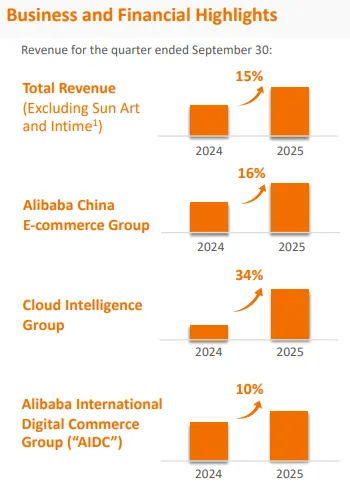
Alibaba has also publicly committed to invest at least RMB 380 billion (about $53B) over three years across AI and cloud infrastructure, foundational models, AI-native applications, and AI integration across existing businesses. That spend is the company telling you what it believes the next decade is about.
Capital return discipline remains a core pillar
Buybacks remain a meaningful part of the story. Alibaba disclosed that the remaining authorization under its repurchase program, effective through March 2027, was $19.1B as of September 30, 2025. If the market insists on pricing Alibaba like a melting ice cube, shrinking the share count is one of the most direct ways to make that mispricing painful over time.
Regulatory risk never disappears, it changes shape
The crackdown era is not the same as it was, but regulation in China is not a one-time event. A fresh example is Beijing’s move to introduce new rules targeting platform pricing practices, set to take effect in April 2026.
This is not “the end of Alibaba,” but it is a reminder that the operating environment can tighten quickly, especially during price wars and social pressure around merchant economics.
Where the stock is today
As of the latest available market print, BABA is around $149.79. That is not the point, but it is a useful anchor: despite real AI traction, the market is still assigning a meaningful discount for geopolitics, regulation, and confidence. The gap between business progress and narrative comfort remains the opportunity set.
Why This Thesis, Why Now (Our Original Work)
This isn’t a reaction to a chart or a tweet. It’s not about catching a bounce or betting on a headline reversal. This is our first published thesis on Northwise because it captures something central to how we think: conviction that holds, even when the noise is loud.
This isn’t just a piece about Alibaba. It’s a statement on how we approach risk, uncertainty, and long-term opportunity.
Alibaba has become a symbol of investor unease: geopolitical risk, regulatory overreach, and the unknowns of doing business in China.
It has been blacklisted, doubted, and discounted. But for all the fear, we see something different: one of the most structurally sound, radically discounted, and misunderstood businesses in global markets today.
If clarity is rare in investing, then misunderstood value is where we make our stand.
The Market’s Doubts: Why So Many Have Walked Away
The skepticism isn’t irrational. Investors watched the largest IPO in history, Ant Group, get pulled days before launch after Jack Ma criticized regulators.
Then Ma disappeared from public view for months. Alibaba was hit with a record $2.8B antitrust fine. Chinese tech stocks lost over $1 trillion in value amid government crackdowns. Trust, already fragile, shattered.
Fast forward to April 2025: Trump’s administration announces a 145% tariff on Chinese imports. China responds with 125% retaliatory tariffs. Fear spreads. The narrative is back: “You can’t trust Chinese companies.”
This context is evolving fast. With new tariffs and protectionist policies returning in 2025, the macro environment around Alibaba is shifting again.
Even contrarians waver. Michael Burry’s Scion Asset Management, once a high-profile BABA bull, reduced its position by 25% in late 2024, though it still holds shares. The exodus continues. Global capital wants clarity, and China rarely offers it on Western terms.
But we see a vacuum. And vacuums often lead to mispricing. Sentiment can drive prices in the short term, but sentiment doesn’t compound. Cash flow does.
Our Lens: Risk, Time, and Opportunity
We don’t trade headlines. We look for asymmetry: where long-term value is high and short-term sentiment is low. That’s where opportunity lives. Investing isn’t about knowing the future; it’s about weighing the odds, measuring the price, and choosing where to stand still.
Yes, there are risks. But Alibaba’s business model is insulated from the tariff storm. They aren’t shipping many physical goods to the U.S. They’re building digital infrastructure across China and Southeast Asia. That means they’re less exposed to export friction and more aligned with regional demand.
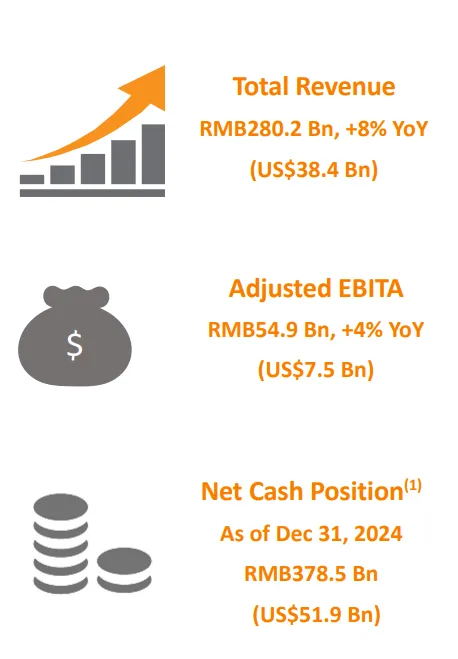
And while Alibaba does operate internationally, its U.S. exposure is minimal. As of Q4 2024, Alibaba’s domestic commerce business generated RMB 129.5 billion (US$17.74 billion), while its international commerce retail and wholesale businesses generated a combined RMB 37.75 billion (US$5.17 billion) with the U.S. accounting for only a fraction of that.
We’re not asking whether BABA will go up tomorrow. We’re asking: What are we buying at this price? And does the business still have the potential to compound over time? Our answer: yes. And when the narrative eventually shifts, as it often does, we intend to already be there.
The Case for BABA: Resilient, Undervalued, and Evolving
To understand why we hold this position with conviction, it’s important to look beyond the surface-level concerns and examine the fundamentals driving Alibaba’s long-term potential.
Valuation, Buybacks, and a Growing Dividend
Alibaba is trading at roughly 17x earnings today, with a forward P/E under 10. It holds over $70B in cash equivalents and is aggressively buying back shares. In 2024, the company also introduced its first-ever cash dividend: a significant milestone that reflects Alibaba’s financial strength and evolving capital return strategy.

While modest for now, the dividend adds an additional lever of shareholder value alongside buybacks. That combination, rising cash flows, falling share count, and growing income, is rare at this scale. Put simply, you’re paying less than 10x forward earnings for a company with dominant market share, margin-rich business lines, and a balance sheet that could swallow most S&P 500 companies whole.
This isn’t a growth-at-any-cost tech story; it’s a profitable behemoth priced like a melting ice cube. And unlike many of its global peers, Alibaba has the cash and discipline to return capital without impairing future growth. It’s what we look for: strong bones and smart capital allocation.
Ecosystem Strength
Its e-commerce platforms (Taobao, Tmall) remain dominant. Its logistics arm (Cainiao) is increasingly essential. The consumer flywheel is intact. Even in the face of economic tightening, user engagement remains strong, and Alibaba’s role in everyday commerce continues to deepen. Few companies are as embedded in the daily lives of a billion people.
Cloud and AI
Alibaba Cloud is the largest cloud provider in China and Asia-Pacific. It’s not just selling compute power, it’s building infrastructure for AI, data sovereignty, and enterprise digitization.
The platform underpins digital transformation across industries, and in 2025, the company committed $53B to AI and cloud over three years. Their Qwen 3 model will power next-gen merchant tools, logistics, and consumer experiences.

This isn’t a pivot. It’s vertical integration. And it’s built on one of the most underappreciated tech stacks in the world. Cloud + AI isn’t a growth story; it’s a moat. Unlike global peers scaling back in China, Alibaba is doubling down, not just on infrastructure, but on owning the full AI stack across logistics, enterprise, and e-commerce.
Positioning in a Splintered World
As the global economy decouples, regional platforms gain strength. Alibaba doesn’t need U.S. approval to thrive. Its future is domestic, digital, and increasingly self-sustaining. While Western firms fear regulatory backlash, Alibaba is designing its roadmap in parallel with national tech goals. If the future is fragmented, Alibaba is already built for that landscape.
Understanding these dynamics doesn’t excuse the risk, but it helps explain why companies like Alibaba may appear opaque or unpredictable to Western capital, and why that dissonance can create opportunity, when valuations begin to detach from reality.
Policy Tailwinds and Strategic Alignment
In recent quarters, Beijing has signaled renewed support for its domestic tech champions, not through slogans, but through regulatory softening, capital support, and public encouragement of private sector innovation. After years of crackdowns, the tone has shifted: China needs growth, and it understands that a competitive tech sector is central to both economic recovery and geopolitical positioning.
This matters. It means companies like Alibaba, once targets, are now instruments of state strategy. And as China seeks to stabilize its economy, restore investor confidence, and present an alternative to U.S.-dominated equity markets, firms with infrastructure, data, and global reach are becoming key levers.
We’re not betting on government goodwill. But we are recognizing the alignment of incentives. Beijing doesn’t want to see its tech sector bleed out; it wants it to lead.
What Would Change Our Mind
We’re not dogmatic. Conviction is not blindness. Here’s what would shift our view:
- Structural decline in core commerce and cloud metrics
- A regulatory regime that actively erodes shareholder alignment
- Persistent capital flight without meaningful reform
- Failure to execute on AI and infrastructure bets
- Signs that Alibaba’s operational discipline has fractured
We’re not ignoring risks. We’re weighing them. And the price today more than compensates for what we see.
Long-Term Thinking Is a Lonely Road
This isn’t a call to action. It’s a window into how we see the world; not just through the lens of Alibaba, but as a broader reflection of our strategy.
This is our first public thesis at Northwise for a reason. It exemplifies the kind of thinking we believe matters most in markets: deliberate, long-view, and resistant to noise. We don’t swing at everything. We wait. We study. And when the odds are asymmetric, the downside limited, and the upside underappreciated — we act.
Alibaba may remain unpopular. That’s fine. Misunderstood assets are where the best long-term setups begin. We don’t need it to be easy, just worth it.
Our strategy isn’t about any one name. It’s about building a portfolio of well-positioned, durable, and asymmetric bets: each diversified by geography, sector, and time horizon. Some will take time. Some may not work. But over the long haul, we believe the structure will.
When price disconnects from business reality, we lean in. Not because we know the outcome, but because we understand the range of possibilities, and the one we’re buying looks mispriced.

Celsius Stock Analysis: The Shelf Reset and the Second Growth Curve
Celsius stock analysis of the shelf reset, Alani growth, Pepsi economics and cash flow, with a 2030 model and a Premium valuation and entry-price framework.

Meta AI Spending: The Customer Is Already Here
Can Meta turn AI spending into shareholder returns? We model advertising, Muse, hardware, capital costs and cash flow through 2030, with a full valuation.

IREN Stock Dilution: Can the Build Reach Shareholders?
IREN stock analysis of AI growth, funding and dilution through 2030. Read our full valuation, 27 scenarios and price zones free. Excel model is Premium.
Northwise Portfolios
See how the research becomes real decisions
Reader discussion
Discuss the research
Create a Free account to join the discussion with a display name.
Create a Free Account
No comments yet. Start a thoughtful discussion.