
Coinbase Stock Price Prediction 2030

Coinbase Stock Price Prediction 2030: From stablecoins to Web3 infrastructure, Coinbase is quietly becoming the backbone of the financial system.
In this article
Coinbase Stock Price Prediction 2030: Will it Reach $800?
From stablecoins to Web3 infrastructure, Coinbase is quietly becoming the backbone of the next financial system.
Why Coinbase Matters in 2025
Coinbase is the front door to crypto for both the public and institutions. As the most visible U.S.-listed crypto exchange, it offers a trusted, regulated gateway into digital assets for millions of users.

Unlike many crypto-native companies, Coinbase has prioritized compliance, transparency, and investor protection, helping bridge the gap between traditional and decentralized finance.
Trusted by blue-chip firms and regulators, Coinbase has become the go-to partner for banks, asset managers, and fintechs looking to build crypto capabilities without taking reputational or compliance risks.
The year 2025 marks an inflection point:
- Regulatory clarity is emerging, with jurisdictions formalizing crypto and stablecoin frameworks.
- Stablecoins are going mainstream, aided by legislation like the GENIUS Act.
- Institutional adoption is accelerating, fueled by ETF approvals and asset tokenization.
Coinbase is no longer just a trading platform. It is evolving into an integrated financial infrastructure provider for Web3, stablecoins, and tokenized assets.
Founding Vision & Strategic Positioning
Founded in 2012 by former Airbnb engineer Brian Armstrong, Coinbase was created to make it easy for everyday people to access Bitcoin at a time when crypto was niche and complex.

Its mission, to increase economic freedom in the world, has always been both ideological and practical. Armstrong sees crypto as a tool to democratize finance and empower individuals globally.
From the beginning, Coinbase made a strategic bet on compliance, pursuing licenses and regulatory frameworks rather than growth at all costs.
Initially focused on the U.S., it built a strong foundation in the world’s most regulated financial market, which now serves as a launchpad for global expansion.
While Binance scaled rapidly through regulatory arbitrage and Kraken leaned into libertarian ideals, Coinbase positioned itself as the “adult in the room.”
It appealed to institutions, regulators, and long-term investors by prioritizing security and trust. This strategy has paid off, and Coinbase is now the most institutionally aligned exchange in the industry.
A Regulated Moat: Compliance as a Competitive Advantage
Coinbase has built the strongest regulatory posture among major crypto players. From the outset, it committed to full compliance with U.S. and international financial regulations, often sacrificing speed for long-term positioning.
The company holds licenses including a New York BitLicense, registration with FinCEN, and numerous U.S. state-level approvals. Internationally, it has secured a MiCA license in the EU and regulatory clearance in Singapore, Brazil, and Canada.
While tensions with the SEC persist, Coinbase is widely viewed as a constructive participant in global policy conversations.
Its infrastructure underpins major institutional products, like BlackRock’s Bitcoin ETF, through Coinbase Custody, which is recognized for its qualified custodian status and institutional-grade security.
COIN Exchange, Brokerage, Stablecoins, and Payments
Trading fees remain the core revenue driver, with higher margins from retail but growing institutional participation.
To deepen user engagement, Coinbase offers advanced tools including Coinbase Prime for institutions, Coinbase One as a subscription model, and Advanced Trade for experienced users.
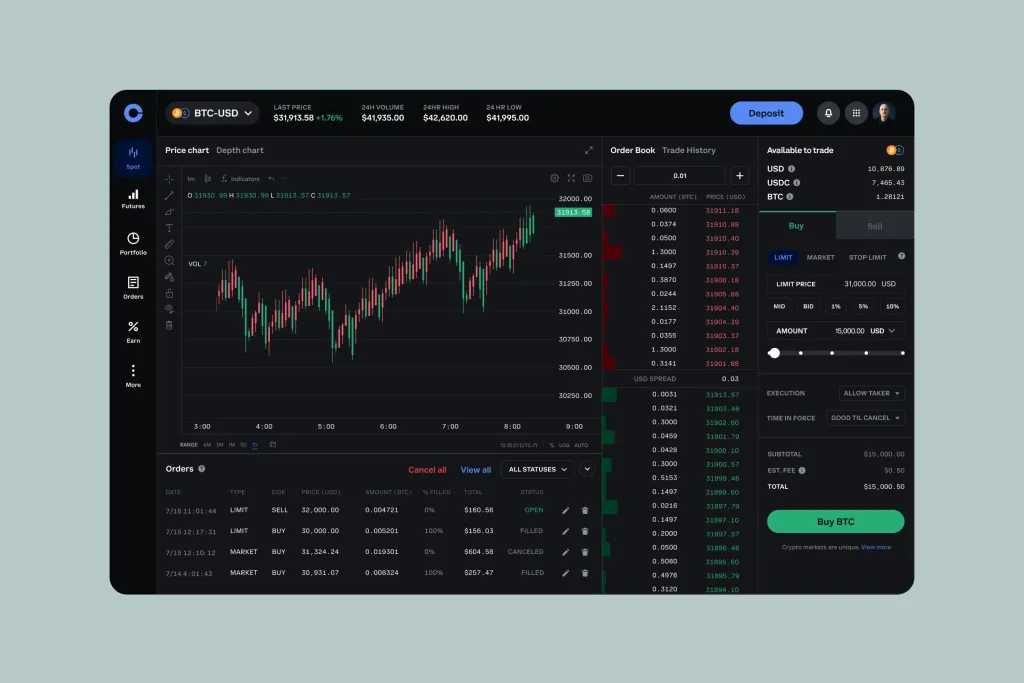
Although fee compression remains a concern, Coinbase is offsetting this through diversification. Revenue is increasingly driven by subscriptions, custody, and staking services, creating a more resilient and recurring revenue base.
Coinbase co-founded USDC with Circle and remains a governance and economic partner. As stablecoin usage grows, Coinbase is strategically and financially positioned to benefit.

New legislation such as the GENIUS Act is paving the way for stablecoins to become a core part of the U.S. financial system.
Coinbase is enabling merchants, including those on Shopify, PayPal, and Stripe, to accept USDC, while also facilitating faster and cheaper cross-border payments compared to traditional methods.
Coinbase Cloud, Coinbase Custody, and the Developer Ecosystem
Coinbase Cloud offers APIs and infrastructure tools for developers, wallets, and exchanges to integrate crypto functionality seamlessly. Institutional clients use Coinbase Cloud to run blockchain nodes and delegate staking with high reliability.
This infrastructure play positions Coinbase as the AWS of crypto—powering Web3 with scalable, developer-friendly backend services.
Coinbase Custody supports ETFs, funds, and asset managers with qualified custodial infrastructure. It is also enabling tokenized fund issuance and on-chain securities.
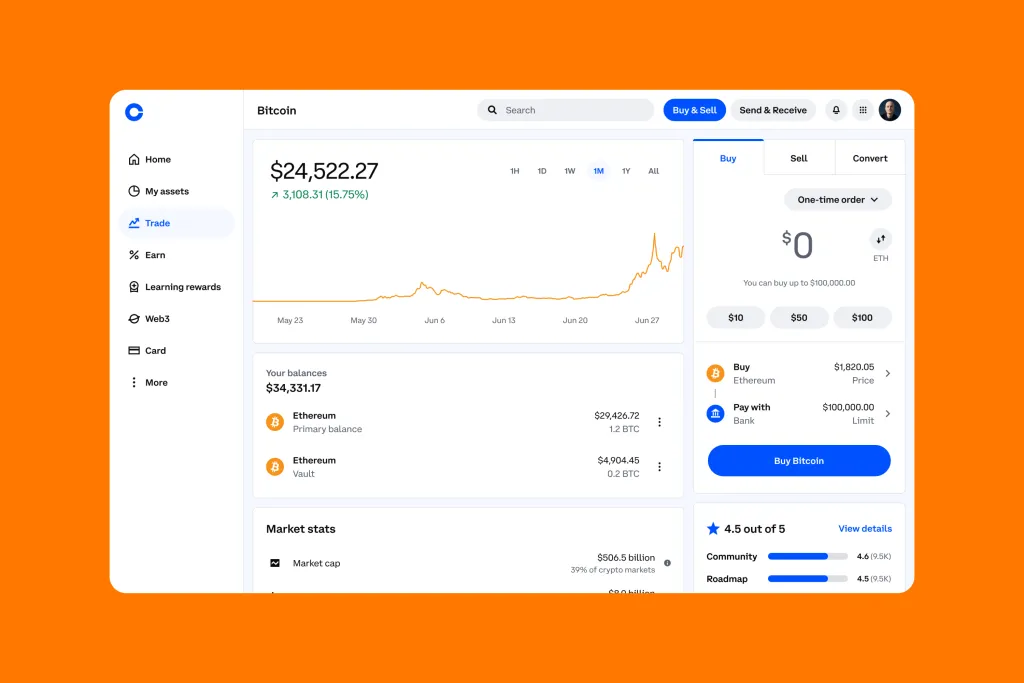
With secure custody, administrative tools, and compliance, Coinbase is evolving into the “State Street of crypto,” replicating key TradFi custodial functions in a decentralized world.
Coinbase Wallet empowers users to self-custody crypto and interact with DeFi and NFTs. Meanwhile, Base—its Ethereum Layer 2 chain built on Optimism’s OP Stack—hosts decentralized applications and scales with Ethereum’s security.
Through these tools, Coinbase is fostering a growing Web3 ecosystem, bridging users and developers across centralized and decentralized platforms.
International Expansion
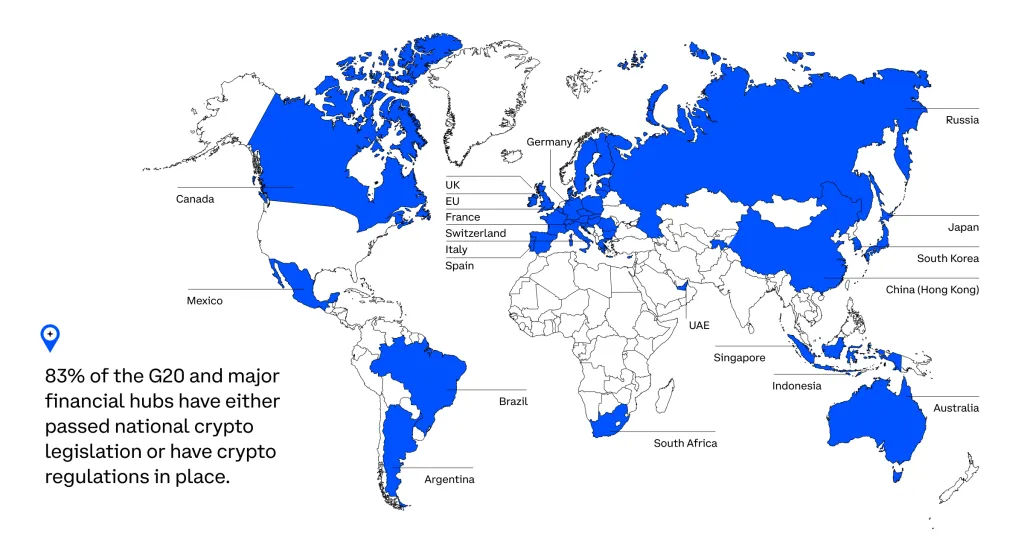
Coinbase has secured new licenses in Europe, Singapore, and Brazil, allowing it to operate compliant platforms globally.
This international push coincides with accelerating crypto adoption, especially in markets grappling with inflation or financial instability.
As regulatory divergence increases, Coinbase’s compliance-first approach is gaining favor with governments and financial authorities. In regions where other exchanges retreat, Coinbase is stepping in.
Financial Snapshot
In Q1 2025, Coinbase delivered revenue of $2.034 billion, comprising $1.262 billion in transaction revenue and $698 million in subscription and services, a 28% YoY increase from $1.637 billion in Q1 2024.
The company reported net income of $66 million, a modest amount due to unrealized losses, but its adjusted EBITDA was an impressive $930 million, reflecting strong underlying profitability.
Subscription and services revenue grew 37% YoY, fueled by:
- Stablecoin revenue at $297 million (up 51%)
- Blockchain rewards at $197 million (up 30%)
- Other services, including Coinbase One subscription and blockchain utility.
Coinbase ended Q1 with $9.9 billion in total USD resources—a combination of cash, crypto holdings, and other liquid assets.
It maintains positive EBITDA and is expanding margins thanks to scalable infrastructure and a diversified product mix.
Valuation and Long-Term Potential
Despite the robust Q1 performance, Coinbase currently trades at approximately 6–8× forward revenue, a discount driven by crypto market cyclicality.
However, Q1 results illustrate a business that is becoming increasingly decoupled from volatile crypto prices, as recurring subscription and service-based revenues grow .
The company’s long-term optionality is substantial:
- ETF and institutional infrastructure support
- Expansion of tokenized securities
- Web3 infrastructure via Coinbase Cloud and Base
By building the foundation for a decentralized, programmable global financial system, Coinbase is positioning itself not just for recovery but for lasting structural growth, justifying a potential multiple expansion if the broader market recognizes this shift.
Coinbase Stock Price Prediction 2030 (2030):
Metric | Bear Case | Base Case | Bull Case |
|---|---|---|---|
Revenue | $12B | $18B | $25B |
Net Margin | 20% | 25% | 30% |
Net Income | $2.4B | $4.5B | $7.5B |
P/E Multiple | 15x | 20x | 25x |
P/S Multiple | 4x | 6x | 8x |
Shares Out. | 245M | 245M | 245M |
Rationale
In summary, our Coinbase Stock Price Prediction 2030 ranges from ~$150 to $815 per share.
While we acknowledge this is a wide range, but it is reflective of the uncertain future of cryptocurrency itself.
Coinbase is transitioning from trading fees to a diversified, recurring revenue model (cloud, custody, staking, stablecoins).
Regulatory clarity, ETF growth, and global expansion support multiple expansion and earnings visibility.
By 2030, Coinbase could justify premium multiples as a hybrid of market infrastructure, developer platform, and custodial powerhouse.
Key Catalysts to Watch
- Implementation of stablecoin legislation, such as the GENIUS Act.
- Growth in Bitcoin and Ethereum ETF assets under management.
- Rising institutional capital inflows.
- Continued international licensing and expansion.
- USDC and crypto integration in platforms like PayPal and Shopify.
Conclusion:
Coinbase is more than an exchange or a wallet. It’s attempting to become the infrastructure layer for the next financial era.
It serves retail, institutional, and developer markets with unmatched regulatory alignment, security, and scale.
As Web3 matures, stablecoins gain traction, and tokenization spreads across asset classes, Coinbase is positioned to be the financial operating system for a decentralized global economy.
This combination of regulatory strength, growth engines, and financial durability makes Coinbase a compelling long-term investment, particularly if you believe in the bull thesis.

Coin Stock Forecast 2030
Coin stock forecast 2030 reveals why Coinbase’s risk-reward has flipped, projecting 370% upside as ARR and institutional scale accelerate.

Celsius Stock Analysis: The Shelf Reset and the Second Growth Curve
Celsius stock analysis of the shelf reset, Alani growth, Pepsi economics and cash flow, with a 2030 model and a Premium valuation and entry-price framework.

Meta AI Spending: The Customer Is Already Here
Can Meta turn AI spending into shareholder returns? We model advertising, Muse, hardware, capital costs and cash flow through 2030, with a full valuation.
Northwise Portfolios
See how the research becomes real decisions
Reader discussion
Discuss the research
Create a Free account to join the discussion with a display name.
Create a Free Account
No comments yet. Start a thoughtful discussion.