
NBIS Alabama Data Center

Birmingham: the Oxmoor project, Q4 2026 commissioning target, power and cooling plans, and remaining delivery questions.
In this article
Nebius's Birmingham project is located at the former Regions Bank back-office property in the Oxmoor area. The company's current plan targets initial commissioning and energization in the fourth quarter of 2026, with construction continuing through 2028. As of this review, those dates describe the development programme, not completed customer delivery.
The earlier article presented too many engineering assumptions as settled facts, including a continuously utilized 300 MW facility and a specific future GPU configuration. This refresh separates the disclosed project from calculations made about a hypothetical full deployment.
The Nebius Data Center Tracker provides the wider location context. The Nebius infrastructure overview connects Birmingham with the other US campuses.
The disclosed property and schedule
Nebius identifies 201 Milan Parkway and describes a 75-acre acquisition in September 2025. Its published programme lists site preparation and permitting, construction beginning during the second quarter of 2026, initial commissioning in the fourth quarter and continued buildout through 2028. Hoar Construction is named as the general contractor. Nebius Birmingham project disclosure.
The distinction between a published programme and achieved progress is important here. The project page retains planning language alongside its schedule. A date on that schedule should be matched with a completed milestone before being treated as operating infrastructure.
Power and cooling remain physical delivery tasks
The company describes new Alabama Power switching and substation infrastructure funded by Nebius, together with a closed-loop cooling design. These are the systems that must connect the property to a dependable source of electricity and remove heat from the equipment.
A substation distributes and transforms electricity; it is not itself a generating plant. Similarly, a closed-loop cooling design recirculates coolant but does not remove the need to reject heat. The precise operating consumption, cooling overhead and equipment inventory require evidence from the delivered system.
Local reporting identifies the project as a 300 MW development. That is useful as a reported scale, with attribution, but it does not establish 300 MW of active IT load or continuous power consumption. BirminghamWatch's project reporting.
Community and permitting issues are material
Nebius describes sound mitigation and a community engagement panel. Local reporting also documents residents' objections and legal challenges concerning the project and the approval process. These are separate perspectives on the development. Company projections about noise, water or tax benefits should not be presented as independently measured outcomes. BirminghamWatch's June litigation report.
This review does not establish a final disposition of every legal challenge. The operational question remains whether the required approvals, electrical work and construction permit the announced delivery sequence to occur.
What would establish progress
The strongest next evidence would identify an energized phase, a completed hall and customer-ready equipment. A disclosed building or utility milestone should be attached to its date and scope. That prevents a partial delivery from becoming a claim that the whole development is complete.
The original energy and PUE calculations are preserved below as historical illustrations. Their assumed full load is not a current Birmingham measurement, and their different facility-power and IT-power assumptions cannot be combined into one operating model.
For the broader commercial assessment and dated forecasts, continue to the Nebius company page. This factual review covers evidence checked through September 17, 2026.
Historical calculations retained from the original study
The following limited examples are preserved from the original publication. Their assumptions and outputs have not been revised. They are not current operating measurements, a new Northwise forecast or a statement of current contracted prices. The factual discussion above uses the latest reviewed evidence.
The retained examples use both 300 MW facility-load and 300 MW IT-load assumptions. They are separate illustrations and must not be combined or treated as verified operating measurements.
Utility Metric | Estimate (300MW Facility) |
|---|---|
Continuous Power Draw | 300MW |
Annual Electricity Consumption | ~2.6 million MWh |
Equivalent Residential Load | ~250,000–300,000 homes |
Efficiency Variable | Impact at 300MW Scale |
|---|---|
1% Power Efficiency Gain | ~26,000 MWh annually |
5% Efficiency Gain | ~130,000 MWh annually |
20% TCO Improvement | Compounds across GPU lifecycle |
PUE Scenario | Effective Total Load at 300MW IT |
|---|---|
1.60 | 480MW total facility load |
1.30 | 390MW total facility load |
1.20 | 360MW total facility load |
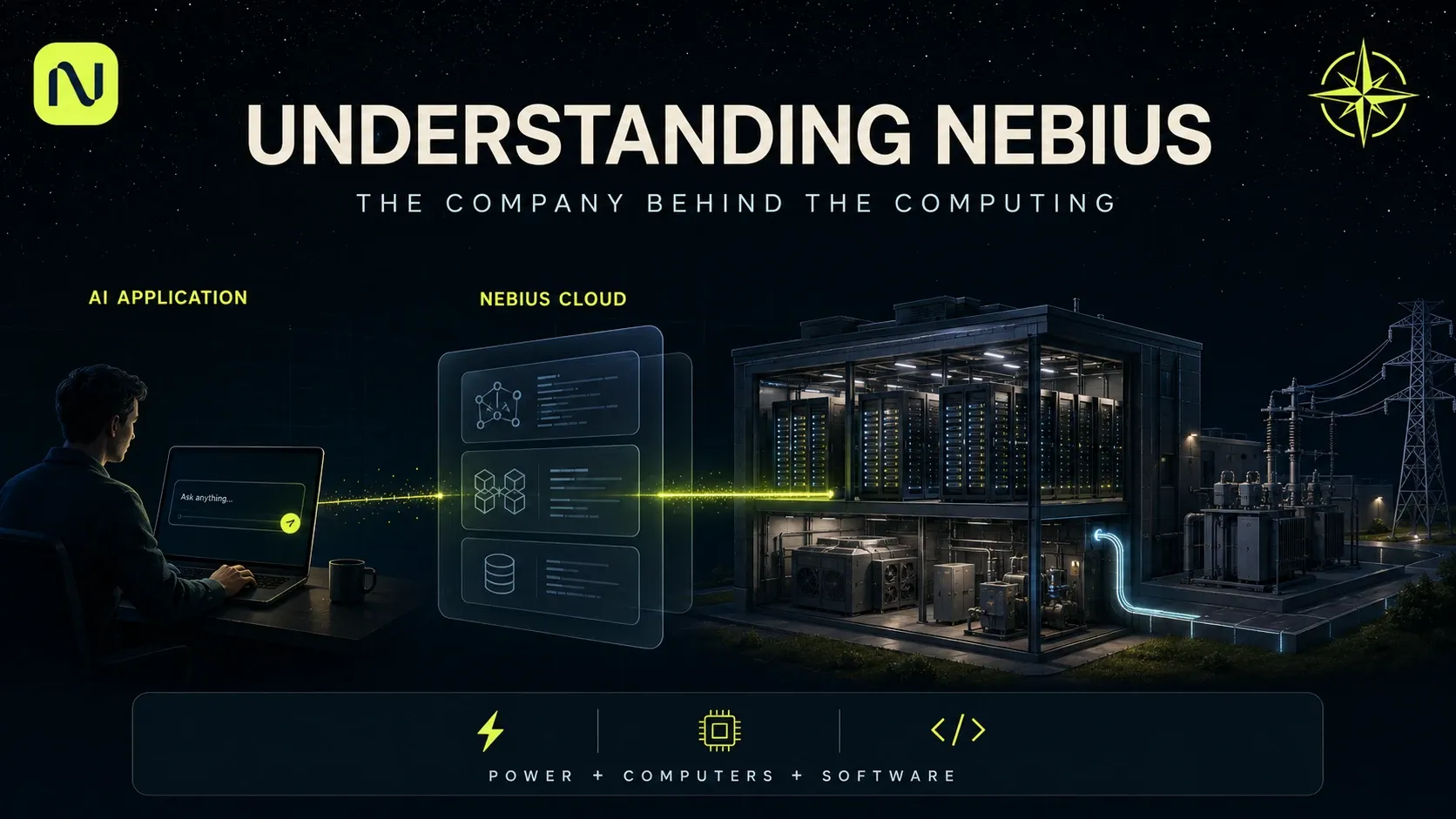
Understanding Nebius: A Complete Guide to the Company
Understand Nebius from the ground up: its AI cloud, competitors, subsidiaries, funding, and growth opportunities. A complete NBIS guide with 14 illustrations.
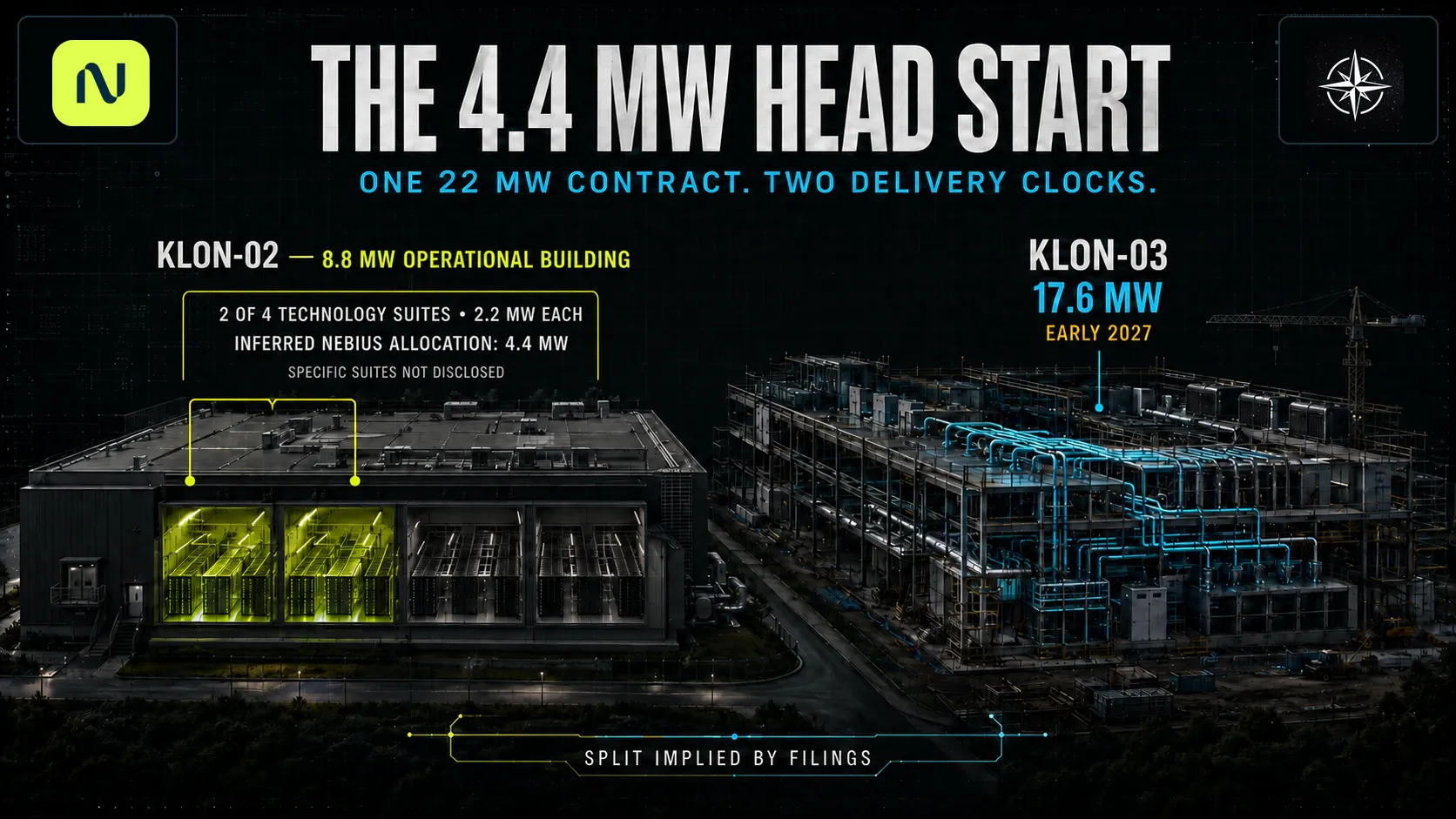
Nebius in Europe: Sovereign AI, UK Expansion and Harlow
How European AI sovereignty supports Nebius’s UK expansion, where Harlow fits, and what its potential 4.4 MW deployment could add to Q3 revenue and 2026 ARR.

NBIS Stock Forecast 2030: The Conversion Problem
A ground-up Nebius model rebuild after Q2 2026, covering AI factory economics, capital structure, valuation scenarios, and the NBIS stock forecast to 2030.
Northwise Portfolios
See how the research becomes real decisions
Reader discussion
Discuss the research
Create a Free account to join the discussion with a display name.
Create a Free Account
No comments yet. Start a thoughtful discussion.