Jumia Market by Market Strategy

Jumia's current eight-market footprint, country revenue comparisons, logistics model and the operating tests behind the turnaround.
In this article
Jumia's current operating footprint is eight African markets. The investment question is how those markets contribute to a shared commerce and logistics business, rather than whether one national growth story can stand in for the whole group.
This guide brings the country series together using the latest reviewed reporting. It distinguishes revenue from merchandise value, local operating progress from consolidated profitability, and management targets from achieved results.
The current market map
Jumia's locations directory lists Egypt, Ghana, Ivory Coast, Kenya, Morocco, Nigeria, Senegal and Uganda. Algeria exited in early 2026, following the earlier South Africa and Tunisia exits. Historical country lists must be adjusted before comparing growth across periods. The Q1 results describe the revised reporting perimeter.
Current market | Q2 2026 revenue, USD millions | Country research |
|---|---|---|
Ivory Coast | 12.260 | |
Nigeria | 11.893 | |
Egypt | 9.855 | |
Kenya | 6.248 | |
Ghana | 4.637 | |
Morocco | 3.410 | |
Uganda | 1.874 | |
Senegal | 1.738 |
Source: the geographical revenue note in Jumia's June 2026 interim financial statements. Revenue is not GMV or country profit. First-party sales and marketplace commissions are recognized differently, so this is not a ranking of total merchandise demand or economic attractiveness.
What changed in the second quarter
The August results announcement reported $216.3 million GMV and an $8.7 million adjusted EBITDA loss. It highlighted Nigeria's growth, continued recovery in Egypt and softer Ivory Coast demand linked to lower cocoa farmgate prices. Group growth therefore masks different country conditions.
The distinction between activity and monetization is especially important when sales shift between first-party merchandise and third-party sellers. A marketplace can handle more orders while reporting a smaller proportion of their value as revenue. The question is what it retains after fulfilling and supporting those orders.
Logistics is the connection between the markets
Jumia's logistics business combines its platform with delivery partners. The operating task is to connect sellers and buyers while controlling the cost of moving, storing, delivering and, when necessary, returning products.
Order density can improve route economics, but reach alone does not prove efficiency. A new delivery point is useful when it attracts enough reliable demand to cover the cost of serving it. The same expansion can be sensible in one locality and uneconomic in another.
The country studies use different questions because they face different commercial situations. Nigeria tests scale and execution. Ivory Coast tests resilience when household demand weakens. Egypt's recovery needs to be separated from currency translation. Ghana's growth needs to persist, while Senegal's recent revenue decline should not be hidden behind an old description of the market as an automatic success.
Capital and the profitability target
The August announcement includes a $50 million equity raise anchored by a $25 million IFC investment. The World Bank Group announcement explains the intended commerce and small-business impact. This is investment capital, not operating revenue or proof that the business has already reached profitability.
Management continues to target Q4 2026 adjusted EBITDA breakeven and positive cash flow, followed by full-year adjusted EBITDA profitability and positive cash flow in 2027. These are dated company objectives. They are not the same as achieved IFRS net income or a revised Northwise forecast.
How to use the series
Begin with the country table, then examine the particular operational question in each linked study. Keep the reporting period, currency basis and metric consistent. A national population estimate, a website traffic ranking or a pickup-point count cannot substitute for evidence of monetization and cash generation.
The separate Jumia forecast report follows the business into valuation. Its assumptions remain a dated model. The Jumia company page collects that work and the rest of the research.

Jumia Stock Forecast 2030: The Business Beyond Breakeven
Explore Northwise’s Jumia stock forecast for 2030: country growth, unit economics, cash flow, dilution and three valuation scenarios, with a financial model.
Where Will Jumia Expand Next?
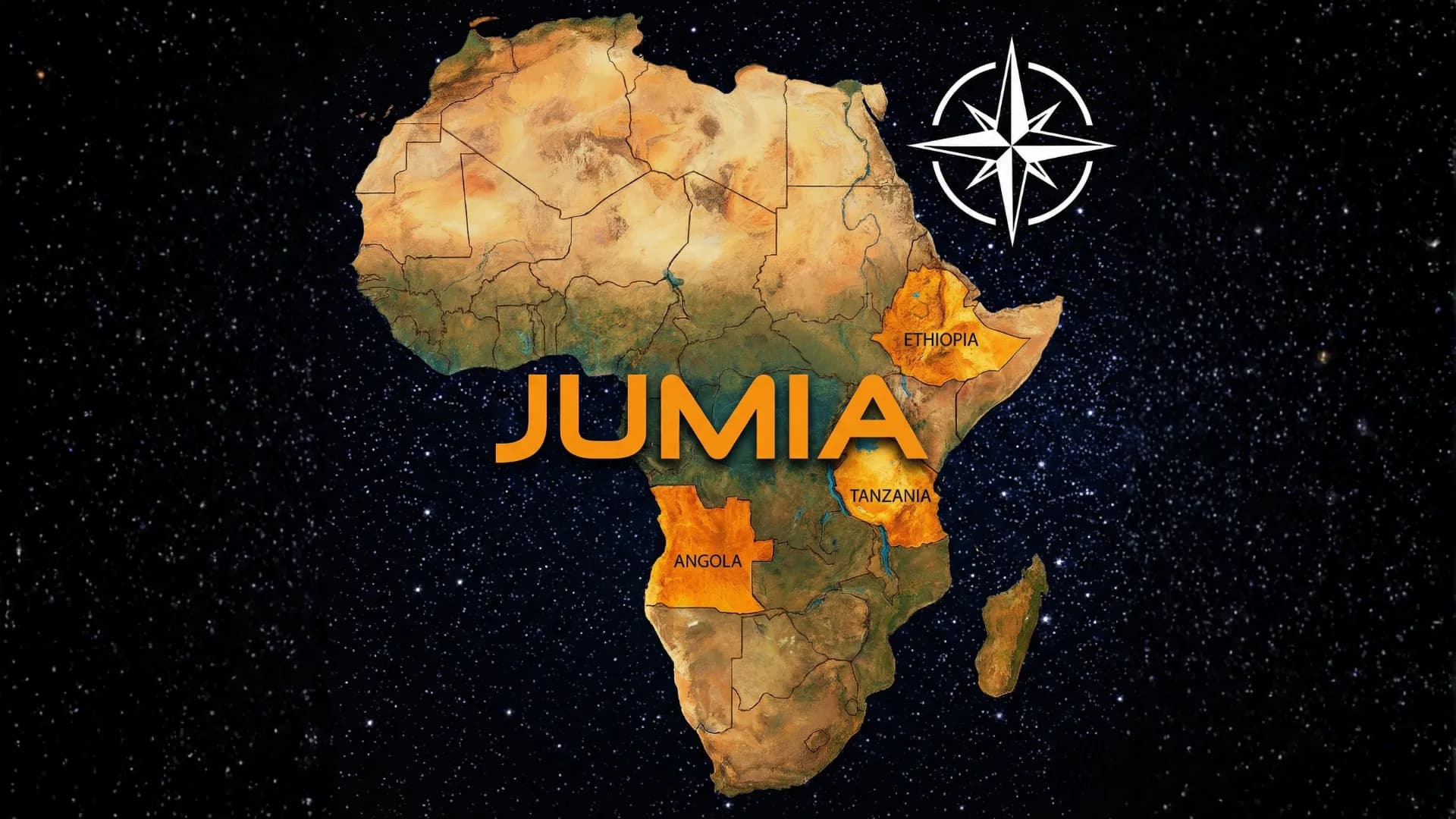
Where will Jumia expand next after profitability? We examine Tanzania, Angola, and Ethiopia as post-2027 growth options.

Jumia Uganda
Jumia Uganda: a growing revenue contribution from a smaller base, customer retention and the economics of expanding delivery coverage.
Northwise Portfolios
See how the research becomes real decisions
Reader discussion
Discuss the research
Create a Free account to join the discussion with a display name.
Create a Free Account
No comments yet. Start a thoughtful discussion.