
Nike Stock Dividend Thesis 2025
Nike stock dividend offers steady yield and brand resilience. Here's why we're long NKE as a value anchor in a volatile market.
In this article
Nike Stock Dividend Thesis 2025: Why We’re Long NKE Right Now
Tariffs, margin pressure, and narrative fatigue have pulled Nike to multi-year lows. But beneath the market’s reaction lies a brand quietly reasserting its strength, and we’re here for it.
The Setup: What the Market Is Missing
In April 2025, Nike (NYSE: NKE) dropped to a five-year low of around $52 per share after new tariffs sent shockwaves through global consumer stocks.
The Trump administration’s sweeping trade policy returned with force, imposing 145% tariffs on Chinese imports and 46% on Vietnamese goods. Nike’s supply chain touches both, making it a highly visible target.
That exposure has spooked the market. But as panic gets priced in, so does opportunity. This is the kind of dislocation that happens when the narrative shifts faster than the fundamentals.
Nike is down, not broken, and history has taught us to pay attention in these moments.
To see our latest forecasting on Nike, check out our Nike Stock Forecast 2030.
Short-Term Pain, Long-Term Control
Nike’s recent results weren’t stellar, but the company still exceeded EPS expectations, a signal that cost control and operational discipline haven’t evaporated. For all the headwinds, this isn’t a company scrambling; it’s a company adjusting.
Beneath the surface, Nike is showing signs of the kind of corporate maturity that distinguishes temporary setbacks from structural decline.
It’s leaning into operational efficiencies, managing inventory with care, and investing selectively even while headlines scream retreat. That’s what long-term operators do, as covered by Medium in their Q3 breakdown.
The Return to Discipline
Nike CEO Elliott Hill, who returned to the company in late 2024, is leading a clear strategic reset: back to sport, back to performance. That clarity is beginning to show: not just in product launches, but in tone, focus, and discipline.
We’re seeing a shift in product strategy (with Pegasus and Vomero lines returning to the forefront), smarter collaborations (like the SKIMS partnership), and a refreshed emphasis on quality storytelling. This is Nike returning to what built its moat: product credibility and cultural weight.
The 2025 Super Bowl ad and Rory McIlroy Masters campaign weren’t just marketing plays, they were strategic statements. The Super Bowl spot leaned into Nike’s legacy: elite athletes, sharp visuals, and an unmistakable tone of conviction.

It wasn’t product-first; it was message-first. The kind of ad that doesn’t just sell shoes; it re-establishes relevance. Similarly, the McIlroy Masters campaign was about craft and calm, performance over spectacle. It reminded longtime followers that Nike still knows how to elevate a moment.
Both campaigns stood out not just for what they said, but for the confidence they showed in how Nike sees itself, not as a trend, but as the standard. As reported by The Times, Hill’s goal is clear: refocus the brand around athletic performance, not lifestyle drift.
The Challenger Surge: Hoka, On, and Brooks
Nike has lost market share in the running segment. Brands like Hoka, On, and Brooks have executed exceptionally well in recent years, particularly among serious runners and niche communities. Their rise is legitimate, and in many ways, overdue.

These brands have excelled by building grassroots communities, innovating with unique midsole technologies, and carving out identity where Nike once dominated by default. Their stores are popping up in major cities. Their audiences are vocal. Their product is good.
But this cycle isn’t new. Challenger brands always rise. Nike, meanwhile, has made a habit of reclaiming its territory. Why? Because few can match its ability to outspend, out-market, and outlast in a category it helped define. And when Nike commits, really commits, to a category, its dominance tends to reemerge.
New launches like the Pegasus Premium and Vomero 18 aim to directly reengage this audience. And grassroots efforts, including local club partnerships, show Nike isn’t ignoring the culture shift, it’s preparing to re-anchor itself in it. Glossy and Business Insider both echo this narrative: Nike’s decline in this space is real, but far from irreversible.
Brand, Balance Sheet, and the Bet We’re Making
Nike is more than a retailer. It’s a symbol. A company that has weathered decades of change with one of the most valuable consumer brands on the planet. The bet here isn’t on perfect execution. It’s on enduring cultural capital. It’s about resilience embedded into a brand.
Even in moments of underperformance, Nike’s global relevance and manufacturing scale give it levers to pull that few competitors can match. Its storytelling, athlete relationships, global reach, and omnichannel muscle remain best-in-class. This is how quality rebounds happen: with systems, not stunts.
Why We’re Long
At today’s levels, we’re not paying for hype. We’re paying for durability. Nike offers asymmetric upside with structurally limited downside. It’s still generating strong free cash flow. It’s still one of the most recognized brands on earth. And it’s still investing, when others are shrinking.
In a portfolio filled with misunderstood growth bets, Nike is something different: a bruised but built-to-last position with a clear reset underway. It gives us exposure to a different part of the economic cycle, one rooted in consumer strength and global reach.
We’re long because this is a play on patience. Because time, brand, and capital still matter.
Dividend Strength: Stability Amid Growth
Nike pays investors to wait. Its current yield sits at 2.87%, backed by 22 consecutive years of dividend increases. The payout ratio remains a sustainable 53%, and Nike has grown its dividend by over 10% annually in the last three years.
This isn’t just financial engineering. It’s a signal: Nike takes shareholder return seriously, and it has the balance sheet to prove it. This is a company that rewards its stakeholders even when growth isn’t front-loaded.
In a world increasingly obsessed with quarterly momentum, Nike reminds us that value accrues slowly, and sometimes quietly. This dividend stability provides ballast to our broader strategy.
It creates a different kind of exposure. One that generates income while we wait for price and value to reconnect. MarketBeat’s dividend data helps underscore that Nike’s shareholder focus isn’t new: it’s embedded.
What Could Derail the Thesis
No thesis is bulletproof, and Nike is not without potential friction points. As we hold this position, here are a few dynamics we’re monitoring closely:
- A prolonged consumer spending slowdown that drags on discretionary categories.
- A misstep in product strategy that fails to reconnect with core performance audiences.
- Further escalation in global trade tension, particularly in Vietnam or China.
- The risk of narrative lag: a brand that’s turning the corner may still be priced like it hasn’t.
These are all manageable. But they matter. We size positions with these possibilities in mind.
Closing: A Portfolio That Holds Up
This isn’t our flashiest position. That’s the point.
Nike complements our exposure to high-growth disruptors. It represents discipline, durability, and a long-term edge in a world chasing narratives. It gives ballast to portfolios otherwise exposed to volatility.
It’s also a reminder that not every position needs to be exciting, it needs to be enduring. Nike is a foundational layer in a portfolio that’s being built to outlast cycles, noise, and hype.
And when a brand like this gets mispriced by a few bad quarters or a macro overreaction? We don’t overthink it.
We just do it.
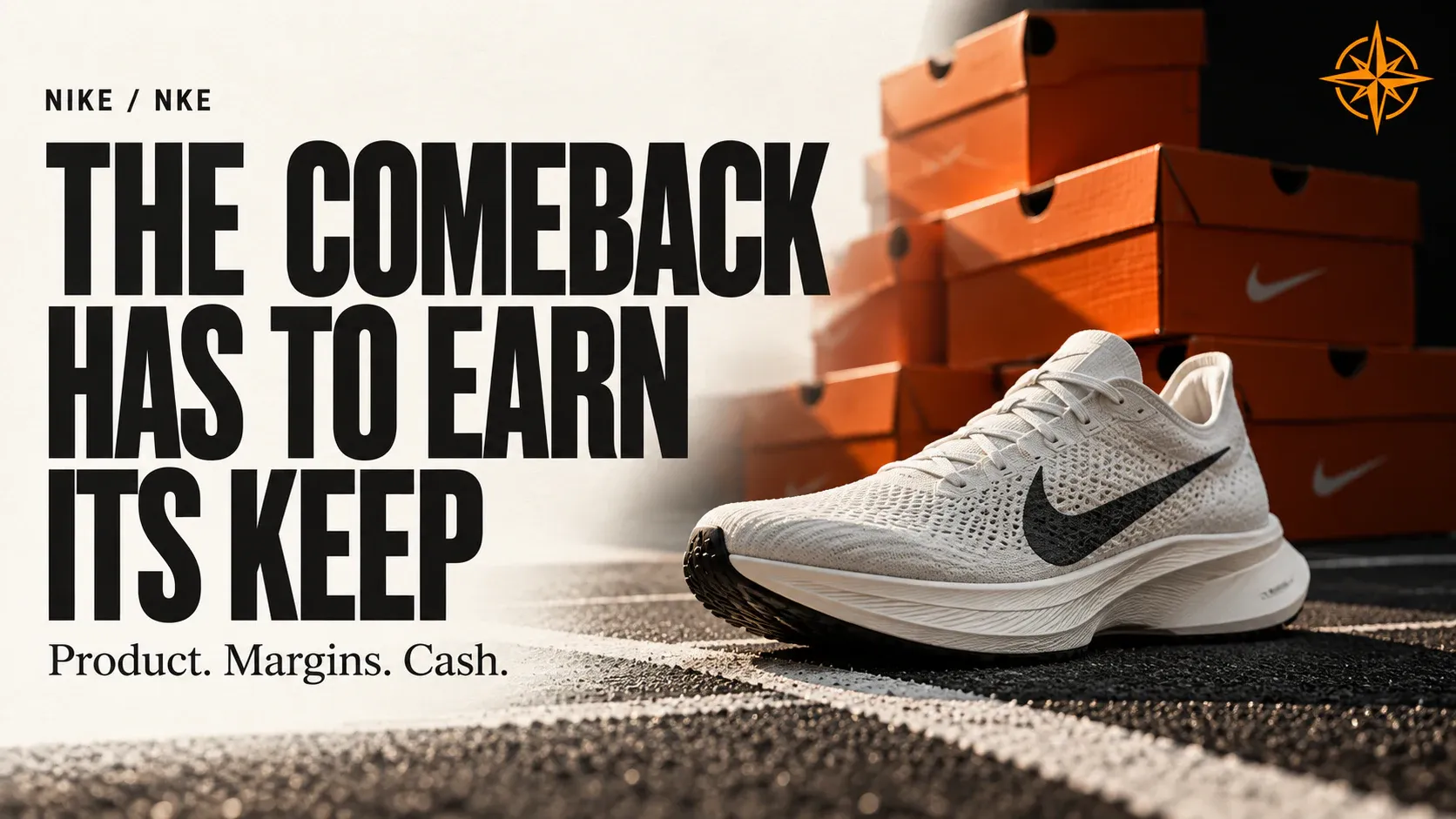
Is Nike Stock a Buy? The Comeback Has to Earn Its Keep
Is Nike stock a buy? We examine its recovery, margins, cash flow and risks, with three operating scenarios and a detailed valuation for Premium members.
Nike Stock Forecast 2030
Nike Stock Forecast 2030: Why unwinding Nike Digital, rebuilding wholesale, and disciplined execution could reset growth and margins this decade.

Celsius Stock Analysis: The Shelf Reset and the Second Growth Curve
Celsius stock analysis of the shelf reset, Alani growth, Pepsi economics and cash flow, with a 2030 model and a Premium valuation and entry-price framework.
Northwise Portfolios
See how the research becomes real decisions
Reader discussion
Discuss the research
Create a Free account to join the discussion with a display name.
Create a Free Account
No comments yet. Start a thoughtful discussion.