
JOBY Stock Forecast 2030
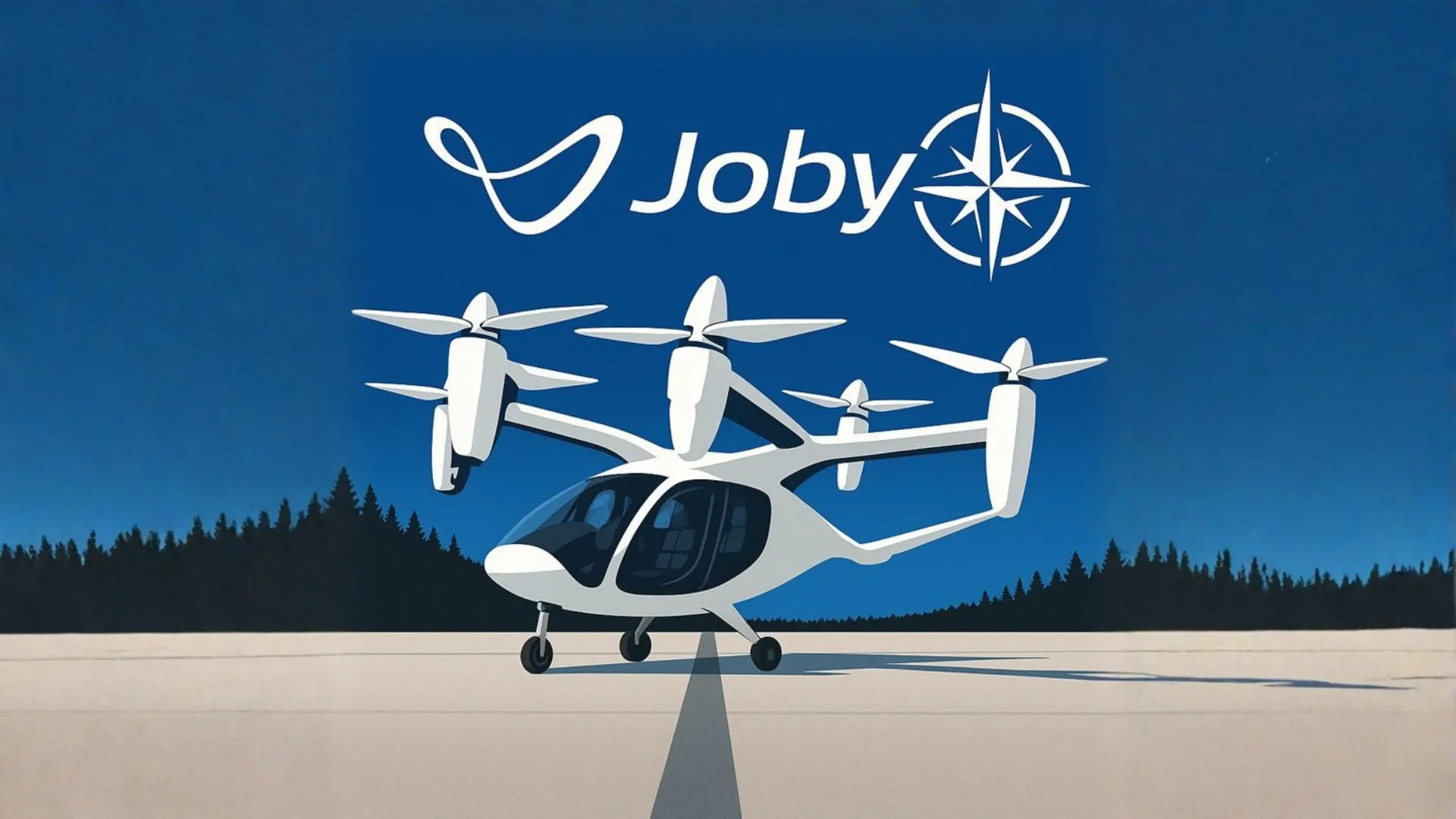
A comprehensive JOBY Stock Forecast 2030 assessing the transition from certification candidate to vertically integrated airline.
In this article
JOBY Stock Forecast 2030: The Industrial Blueprint for Aerial Mobility
A comprehensive institutional assessment of Joby Aviation as it transitions from certification candidate to vertically integrated operator, with emphasis on the Toyota Production System, the hydrogen expansion, and the unit economics of a direct-to-consumer airline.
Executive Summary: The Flagship of Electric Aviation
Joby Aviation, Inc. (NYSE: JOBY) stands at the precipice of a transformative era in aerospace, positioning itself not merely as an aircraft manufacturer but as a vertically integrated aerial mobility operator. As of late 2025, the company represents the vanguard of the electric Vertical Take-Off and Landing (eVTOL) sector, distinguished by its mature technology stack, substantial capital reserves, and strategic alliances with industrial titans like Toyota and Delta Air Lines.
This report provides an exhaustive analysis of Joby Aviation’s operational status, financial health, and technological roadmap as it navigates the critical final stages of Federal Aviation Administration (FAA) certification.
The investment thesis rests on Joby’s potential to redefine urban and regional transportation through a “direct-to-consumer” business model. Unlike competitors opting to sell aircraft to airlines or leasing companies, Joby intends to own and operate its fleet, capturing the full economic value of the passenger journey.
However, the equity should be understood as an execution-constrained asset. Investors are underwriting a capital-intensive industrial ramp-up, the complexity of FAA “powered-lift” regulation, and the ability to scale manufacturing yield using automotive principles.
The divergence in outcomes between Joby and its peers, marked by the insolvency of competitors like Lilium and the differing strategies of Archer, highlights that survivability in this sector is a function of capital durability and industrial partnership, not just aerodynamic design.
History and Leadership of JOBY: Engineering Silence
To understand Joby’s trajectory, one must examine its provenance. Founded in 2009 by JoeBen Bevirt, a serial entrepreneur with a background in robotics and consumer products (GorillaPod), the company operated in stealth for a decade.
This long gestation period allowed for the “clean sheet” vertical integration of the technology stack. Joby did not simply integrate off-the-shelf motors; it designed high-torque, low-weight propulsion systems from scratch to meet the primary design constraint: acoustic invisibility.
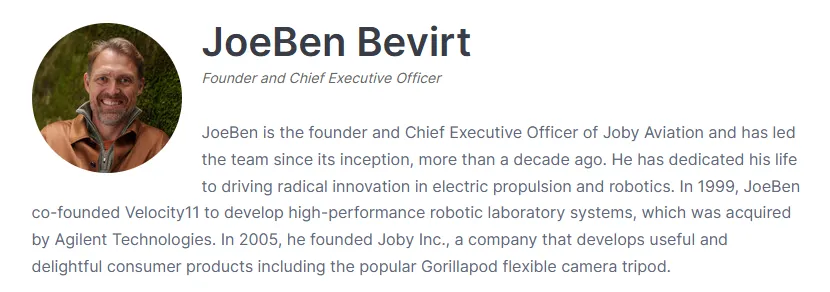
The governance structure reflects a synthesis of Silicon Valley speed and Detroit discipline. JoeBen Bevirt retains the “North Star” vision of saving a billion people an hour a day, driving the engineering culture that prioritizes vertical integration. Paul Sciarra, the Pinterest co-founder and Executive Chairman, pivoted the company from hardware sales to a service model, recognizing that operational margins are the key to mass-market economics.
Tetsuo “Ted” Ogawa, the President/CEO of Toyota Motor North America, sits on the board, institutionalizing the alliance and signaling that Toyota views Joby as a strategic extension of its mobility portfolio rather than a venture bet. Michael Huerta, the former FAA Administrator, brings essential regulatory foresight to the board, aiding in the navigation of the G-1 certification basis and Part 135 operations.
The JOBY Technology Stack: Anatomy of the S4
The S4 Architecture: Design for Urban Utility
The Joby S4 is a five-seat, piloted eVTOL utilizing a distributed electric propulsion (DEP) system with six tilting propellers. Its architecture is defined by “vectored thrust,” allowing vertical takeoff and efficient wing-borne cruise. The aircraft boasts a range of approximately 150 miles at 200 mph, covering 99% of intra-city trips.
Critically, the propellers turn at low RPM to avoid the low-frequency “thumping” characteristic of helicopters. NASA verification confirmed the aircraft is approximately 100 times quieter than a helicopter during takeoff and landing. This acoustic profile is the “key to the city,” enabling access to vertiports in dense, high-value neighborhoods where helicopters are banned or heavily restricted.
Joby utilizes commercially available automotive-grade NMC 811 lithium-ion cells, packaged in-house for thermal stability, avoiding the execution risk of unproven battery chemistries while achieving specific energy density sufficient for the mission profile.
The Hydrogen Pivot (SHy4): Expanding the TAM
In a strategic diversification, Joby revealed its acquisition of H2Fly and the subsequent flight of the SHy4 liquid hydrogen-electric demonstrator. In mid-2025, this aircraft completed a landmark 523-mile flight over Marina, CA, emitting only water vapor.
While the battery-electric S4 targets intra-city hops, the hydrogen variant unlocks regional mobility (300–500+ miles). This creates a product family where Joby can compete with regional turboprops and rail for connections like London to Paris or San Francisco to Los Angeles.
The vacuum-jacketed liquid hydrogen tank offers energy density far superior to gaseous hydrogen or batteries, allowing for payload fractions that make regional transport economically viable.
The Defense Bridge: Agility Prime & SuperPilot
Joby’s engagement with the Department of Defense (DoD) is not merely a side project; it is a critical revenue bridge and technology incubator. The current contract value with the U.S. Air Force’s Agility Prime program is up to $131 million.
Operational Deliveries
As of late 2025, Joby has delivered aircraft to both Edwards Air Force Base and MacDill Air Force Base. The MacDill deployment tests the aircraft in a humid, maritime environment for logistics and personnel transport, while Edwards focuses on flight testing and expanding the operational envelope. These deliveries generate revenue before FAA certification, subsidizing the commercial ramp-up.
JOBY SuperPilot and Autonomy
Furthermore, the acquisition of Xwing’s autonomy division in 2024 has been integrated into the “SuperPilot” platform. This system has logged over 7,000 miles of autonomous operations.
In the near term, this technology powers “Loyal Wingman” and unmanned logistics missions for the military. In the long term (post-2030), it enables pilotless commercial operations, which is the ultimate lever for unit economics as removing the pilot reduces weight and operating costs.
ElevateOS: The Digital Infrastructure of Flight
The physical aircraft is useless without the digital backend to manage it. Joby’s software suite, ElevateOS, is an often-overlooked asset derived from the acquisition of Uber Elevate. It includes:
- Pilot App: Managing flight plans, weight and balance, and pre-flight checks.
- Rider App: For consumer booking (now integrated directly into the main Uber app).
- Operations Core: An intelligent matching engine that optimizes aircraft positioning, charging schedules, and maintenance intervals.
Critically, Joby has received FAA authorization to use ElevateOS for its Part 135 commercial operations. This is not “vaporware”; it is a regulated software stack currently being used to manage Joby’s internal employee shuttles and Blade operations.
The ability to integrate with Delta and Uber provides a customer acquisition funnel with near-zero marginal cost, allowing Joby to focus on flight operations rather than marketing spend.
Manufacturing Strategy: The Toyota Moat
Retail investors often view the Toyota partnership as a source of capital, but institutional analysis views it as a transfer of industrial process.
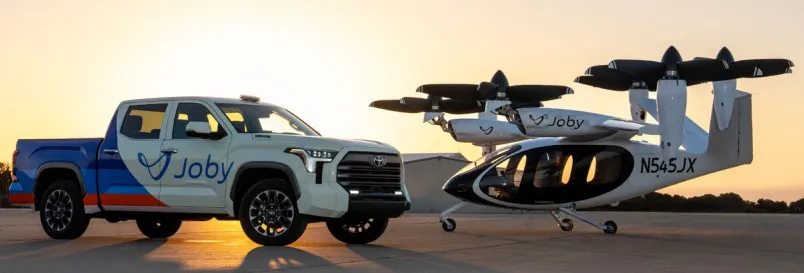
The Toyota Production System (TPS)
Toyota has deployed manufacturing engineers directly to Joby’s production lines to assist in designing tooling that reduces cycle times for complex tasks, such as carbon fiber layups and wiring harness installation.
A long-term agreement allows Joby to source powertrain components through Toyota’s massive automotive supply chain. This bypasses the high-margin aerospace tier-one suppliers, creating a structural cost advantage that competitors cannot easily replicate.
The Tale of Two Factories
Production is split between two facilities:
- The Pilot Line (Marina, CA): Focused on Low-Rate Initial Production (LRIP) and is producing the TIA-conforming aircraft.
- The Scale Line (Dayton, OH): Located near the cradle of aviation, the Dayton facility targets a capacity of up to 500 aircraft per year. It utilizes a lower-cost skilled workforce and has already begun producing propeller blades as of late 2025.
JOBY Certification Status: FAA and “Parallel Processing”
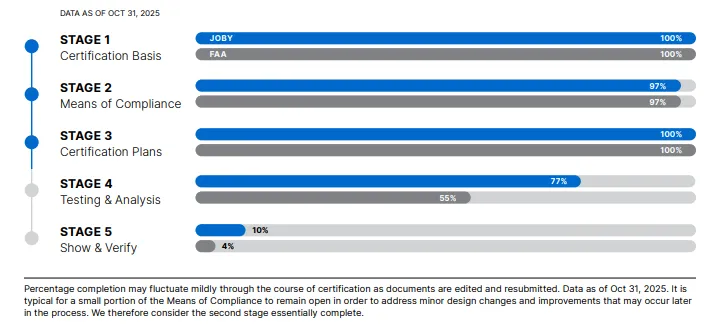
Joby is certifying under FAA Part 21.17(b), a “powered-lift” category. The company has completed the G-1 (Certification Basis) and G-2 (Means of Compliance) stages, effectively locking in the “rules of the game.”
As of late 2025, Joby has entered the Type Inspection Authorization (TIA) phase, the inflection point where the FAA moves from reviewing paperwork to flying the aircraft for credit. Power-on testing of the first FAA-conforming aircraft has commenced. While Joby reports being approximately 70% complete on its side of the certification plans, the remaining portion involves the most rigorous flight testing.
Simultaneously, Joby is pursuing a qualification program with the UAE’s General Civil Aviation Authority (GCAA). The goal is to launch commercial operations in Dubai by 2026. This strategy de-risks the FAA timeline by allowing Joby to accumulate operational flight hours and validate its airline procedures in a permissive regulatory environment. The “Parallel Processing” approach means data gathered in Dubai’s heat could potentially credit towards FAA requirements.
JOBY Commercialization: The Direct-to-Consumer Airline
Joby’s business model is analogous to a vertically integrated airline; by operating the fleet, they capture recurring ticket revenue rather than one-time hardware sales.
Joby and Uber Elevate
The acquisition of Uber Elevate integrated Joby into the Uber app, allowing users to book a “multi-modal” trip (Uber car -> Joby flight -> Uber car) in a single transaction. Additionally, acquiring Blade’s passenger division gave Joby immediate control over key infrastructure, including terminals in New York (JFK, East River) and Los Angeles.
This allows for a “drop-in” strategy where Joby replaces Blade’s noisy helicopters with quiet eVTOLs, instantly upgrading the margin profile. A premium partnership with Delta Air Lines is designed to integrate the “home-to-airport” leg for high-value business travelers, solving the friction of accessing major hubs like LAX and JFK.
Unit Economics
Management projects a payback period of roughly 1.3 years per aircraft, assuming high utilization (2,500 flight hours/year). The marginal cost of electric flight is significantly lower than helicopter operations due to the absence of jet fuel and fewer moving parts, theoretically allowing pricing to approach Uber Black levels at scale.
Financial Analysis: Capitalizing the “Valley of Death”
As of Q3 2025, Joby held approximately $978 million in cash and short-term investments. Following an October 2025 equity offering (netting ~$576M) and the strategic commitment from Toyota, total pro-forma liquidity approaches $1.5 billion.
With cash burn estimated at $500–$540 million for full-year 2025, the current cash position funds operations well through the anticipated certification window of late 2026/2027. Unlike peers facing solvency crises, Joby has the buffer to absorb delays.
Revenue in Q3 2025 surged to $22.57M, driven by the consolidation of Blade passenger revenue and defense contract milestones, signaling the transition from R&D shop to revenue-generating operator. While the reported net loss of ~$401M includes significant non-cash charges related to the revaluation of warrants and earn-out liabilities, investors should focus on Adjusted EBITDA (~$133M loss) as the true proxy for operating burn.
Competitive Landscape: The eVTOL Divergence
The sector is no longer a uniform block; it has fractured into leaders, followers, and the distressed.
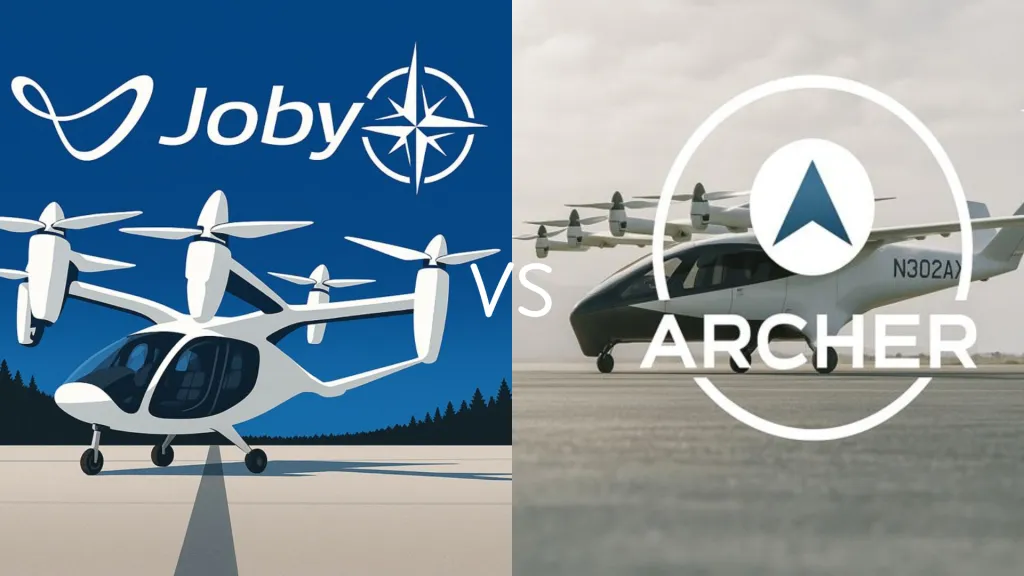
- Archer Aviation (ACHR): The primary “Fast Follower,” utilizing a contract manufacturing model with Stellantis. While Archer has a strong order book and acquired Lilium’s patents, they trail Joby in FAA Stage 4 progress (15% vs 70% per Grizzly Research).
- Beta Technologies: Focuses on cargo-first applications with a simpler design, reducing immediate certification complexity and gaining strong defense traction.
- Lilium: Distressed and liquidating, highlighting the capital intensity of the sector.
- Vertical Aerospace: Recertifying and remains significantly undercapitalized compared to Joby.
Joby’s primary advantage remains the maturity of its S4 design (flying full-scale since 2017) and the industrial capability of Toyota.
JOBY Stock Forecast 2030: Scenarios
Equity value will be driven by probability-weighted outcomes of certification and manufacturing scale, not near-term revenue.
Bear Case: The Certification Trap
In this scenario, unforeseen aerodynamic issues during TIA testing force a design loop, pushing certification to 2028. Cash burn erodes the liquidity buffer, and the “Direct-to-Consumer” model proves operationally complex, forcing a pivot to hardware sales and capital compression via down-round financing.
Base Case: The Industrial Grind
FAA certification is achieved in late 2026/early 2027. Commercial service launches in Dubai and New York with limited routes. Manufacturing ramps slowly in Dayton, and while revenue grows, heavy depreciation keeps the company unprofitable through 2028. The Toyota partnership ensures survival, and the stock appreciates steadily as a high-growth industrial asset.
Bull Case: The Toyota Multiplier
Certification is achieved in 2026. The Toyota Production System enables a rapid, high-yield ramp in Dayton. The S4’s acoustic profile allows for aggressive vertiport expansion, the SHy4 hydrogen variant secures massive defense contracts, and autonomy is introduced for cargo by 2029. Valuation expands to reflect a mobility platform multiple (like Uber/Lyft) rather than a manufacturing utility, driven by high-margin software and service revenue.
Conclusion
Joby Aviation is the “adult in the room” of the eVTOL sector. It possesses the most mature airframe, the deepest pockets, and the most formidable industrial partner. However, it remains an execution-constrained asset.
The next 18 months of FAA for-credit testing will determine if the company’s capital fortress is sufficient to bridge the gap to commercial reality. For the institutional investor, Joby represents a call option on the future of regional transport, priced against the reality of industrial execution.

Celsius Stock Analysis: The Shelf Reset and the Second Growth Curve
Celsius stock analysis of the shelf reset, Alani growth, Pepsi economics and cash flow, with a 2030 model and a Premium valuation and entry-price framework.

Meta AI Spending: The Customer Is Already Here
Can Meta turn AI spending into shareholder returns? We model advertising, Muse, hardware, capital costs and cash flow through 2030, with a full valuation.

IREN Stock Dilution: Can the Build Reach Shareholders?
IREN stock analysis of AI growth, funding and dilution through 2030. Read our full valuation, 27 scenarios and price zones free. Excel model is Premium.
Northwise Portfolios
See how the research becomes real decisions
Reader discussion
Discuss the research
Create a Free account to join the discussion with a display name.
Create a Free Account
No comments yet. Start a thoughtful discussion.