Grab Advertising

Grab advertising is lifting delivery margins through intent-based monetization that avoids labor costs, increased regulation, and pricing scrutiny.
In this article
Grab Advertising Is Already Improving Margins in 2026
Why advertising has become the cleanest profitability lever inside Grab’s delivery ecosystem without triggering regulatory or labor pressure
The Market Still Thinks Pricing Is the Only Margin Lever for Grab
When investors talk about margin expansion in delivery platforms, the conversation almost always collapses into pricing. Higher merchant commissions. Higher delivery fees. Lower incentives. Some combination of the three. In developed markets, that framing can work for periods of time. In Southeast Asia, it runs directly into reality.
Grab operates in markets where delivery economics sit under constant scrutiny. Merchant commissions are politically visible. Consumer fees are price sensitive. Courier compensation is treated as a social issue rather than a cost line. Singapore has already formalized platform labor protections. Indonesia and Vietnam remain fluid, but not permissive. The room to push explicit pricing levers without response is limited and narrowing.
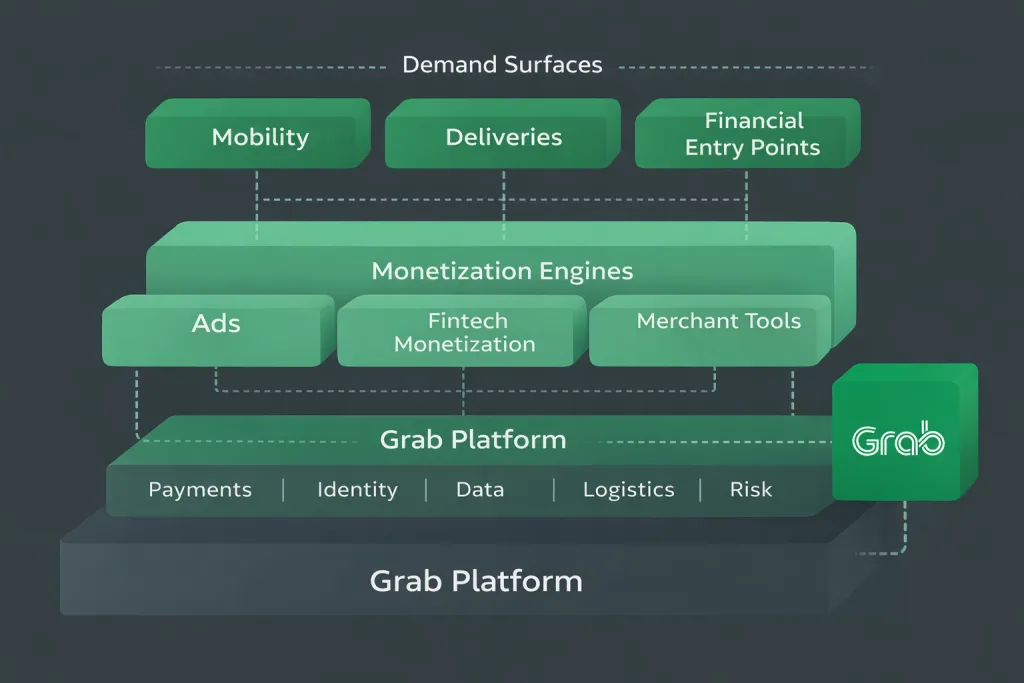
That constraint shapes how margins can expand. It does not eliminate the possibility. It changes the path.
The mistake is assuming that profitability must come from extracting more value per transaction. In practice, that approach forces tradeoffs. Higher fees compress merchant participation. Lower incentives destabilize supply. Both invite regulatory attention. Even when they work tactically, they rarely compound cleanly over time.
What the market underestimates is the value of monetizing activity that already exists. Delivery platforms generate high-intent moments by default. Users are already searching, browsing, and deciding. Merchants are already competing for visibility. That demand does not need to be created. It needs to be organized.
This is where advertising enters the story. Not as a growth narrative or a new business line, but as a margin lever that operates alongside the platform rather than against it. Ads do not require more couriers. They do not require higher delivery fees. They do not change the economics of a completed order. They monetize attention that is already present.
Understanding this distinction is critical. In a tightening regulatory environment, the cleanest margin expansion comes from levers that do not look like monetization at all. Advertising fits that profile. It lifts profitability without forcing Grab to renegotiate its social or political contract with the markets it operates in.
That is why it matters, and why it has begun to show up in the numbers.
GRAB Advertising Monetizes Intent Without Touching Labor
Delivery platforms are structurally constrained by labor. Every additional order pulls on couriers. Every pricing change affects driver supply, merchant participation, and regulatory sensitivity. Advertising does none of that.
Grab’s advertising layer monetizes intent that already exists inside the app (similar to its financial services business). Consumers are not being redirected from elsewhere. They are already searching for restaurants, browsing menus, and deciding where to order. Merchants are already competing for attention in a finite digital shelf. Advertising simply organizes that competition and prices it.
That distinction matters operationally. Ads scale without adding delivery volume, increasing courier hours, or intensifying incentive spend. A sponsored placement does not require another rider on the road or another bag handed off. It generates revenue from the same session, the same user, and the same infrastructure.
This is why advertising behaves differently from core delivery monetization. Raising commissions or fees forces a negotiation with merchants and consumers. Advertising offers merchants a choice. Those who see return on spend increase their budgets. Those who do not opt out without destabilizing the platform. The monetization is voluntary, performance-driven, and reversible, which keeps it largely outside the regulatory and political surface area that pricing changes attract.
There is also a liquidity dimension that matters more than it first appears. Merchants with predictable settlement cycles and access to working capital are more willing to reinvest in visibility. Advertising spend becomes an extension of operations rather than a discretionary marketing line. That stability allows ad revenue to compound even when consumer demand fluctuates or promotional intensity is reduced.
For Grab, this creates a rare alignment. Advertising lifts revenue and margins without importing labor sensitivity, without increasing fulfillment complexity, and without drawing attention to pricing power. It strengthens the platform by monetizing coordination rather than extraction.
This is why advertising belongs structurally inside the ecosystem rather than alongside it. It does not change how the platform works. It changes how efficiently it captures value from activity that was already there.
The result is a margin lever that can scale quietly, which is exactly what a platform under growing scrutiny needs.
The Numbers Show This Is Already Working GMV
Advertising inside Grab is no longer conceptual. It is observable in penetration, merchant behavior, and segment margins.
By early 2025, advertising revenue reached roughly 1.7% of Deliveries GMV, up from about 1.3% the year prior. That level has held across multiple quarters, which matters more than the absolute figure. It signals that ads have moved past experimentation and into a steady-state layer of monetization.
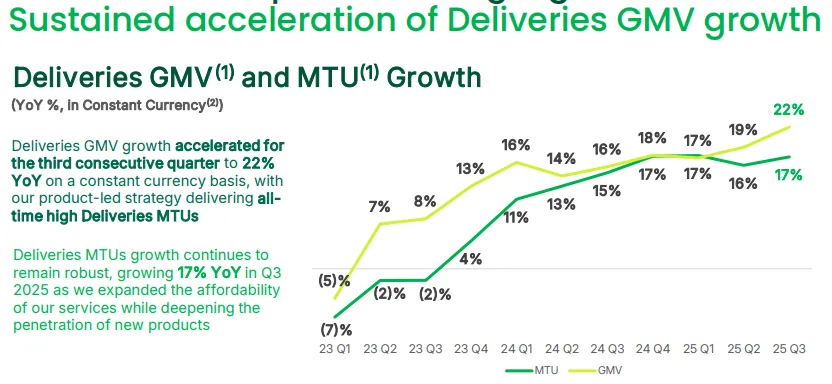
Grab Q3 Investor Presentation
Merchant participation has expanded alongside that penetration. Grab disclosed that monthly active advertisers grew sharply year over year, while average spend per advertiser increased at the same time. Those two metrics compounding together are what give advertising durability. Growth is not dependent on squeezing more dollars out of the same merchants. It is coming from a broader base spending more as returns justify it.
The margin impact is already visible. Deliveries adjusted EBITDA as a percentage of GMV has improved steadily, moving from the mid-1% range into the low-2% range over the past year. Management has repeatedly pointed to advertising contribution and operating leverage as the primary drivers, not aggressive fee increases or incentive cuts.
That attribution matters. Margin expansion driven by pricing would show up as merchant pushback or volume degradation. Margin expansion driven by ads shows up as better unit economics without friction. The data points to the latter.
What is easy to miss is how early this still is. A penetration rate below 2% of GMV leaves room for incremental lift even if growth slows. The model does not require Grab to become an advertising company. It requires ads to remain additive and disciplined.
This is why advertising belongs in the margin discussion even for investors who are skeptical of platform monetization stories. The evidence is not forward-looking optimism. It is backward-looking behavior that has already improved profitability without changing the economics of delivery itself.
Next, the question becomes why this lever is particularly valuable in Southeast Asia, where regulation and price sensitivity make most other paths to margin expansion fragile.
Why The Ad Lever Matters More in Southeast Asia
Advertising would be attractive in any delivery platform. In Southeast Asia, it is structurally important.
Grab operates across markets where explicit monetization is increasingly constrained. Singapore has already formalized platform labor protections. Indonesia and Vietnam remain less codified, but not permissive. Merchant commissions and consumer fees are politically legible. Driver compensation is socially sensitive. Each adjustment invites scrutiny, negotiation, or intervention.
That environment changes the hierarchy of levers. Anything that looks like price extraction carries second-order risk. Advertising does not.
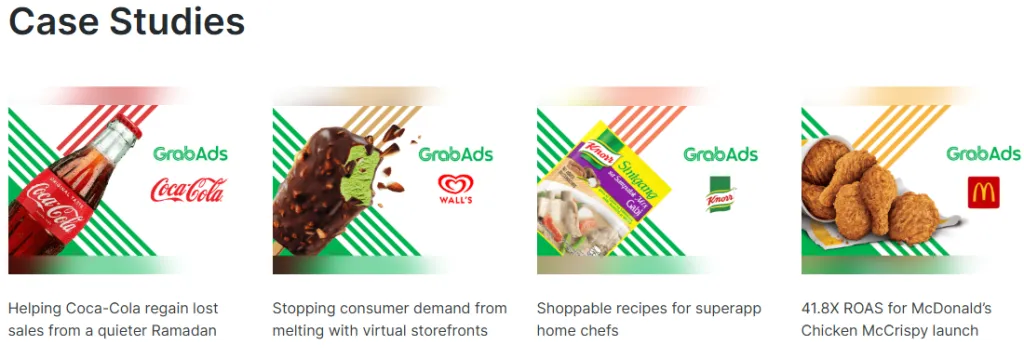
Ads allow Grab to increase monetization without changing fares, commissions, or courier pay. They lift revenue per session indirectly, through merchant competition for visibility rather than through platform mandates. That distinction keeps advertising largely outside the regulatory surface area that surrounds delivery pricing.
There is a second effect that matters just as much. Advertising increases GMV indirectly. Better placement improves discovery. Higher conversion raises order frequency. Merchants who see consistent returns reinvest in visibility, which feeds back into demand without requiring subsidies. GMV grows through coordination rather than incentive spend.
This is especially valuable as regulatory pressure rises. In markets where direct fee increases risk backlash, indirect demand stimulation becomes the safer path to scale. Advertising functions as a demand lubricant rather than a toll.
It also improves merchant liquidity in ways that compound. Predictable settlement cycles and higher order volumes stabilize cash flow. Stable merchants spend more consistently on ads. That loop supports both revenue and margin without stressing labor or pricing.
The result is a monetization layer that aligns with how Southeast Asian platforms are allowed to operate. It respects political constraints, avoids labor entanglement, and still produces operating leverage. That combination is rare, and it explains why advertising is emerging as the cleanest margin lever in the ecosystem rather than an auxiliary revenue line.
The final step is to address the misconception that this makes advertising the story. It does not. It makes it the quiet enabler.
What the Market Gets Wrong, and Why That’s Fine
The market tends to look for a single engine. A breakout product. A new vertical that justifies a re-rating. In Grab’s case, advertising gets pulled into that role far too often.
That framing misses the point. Advertising does not need to dominate the revenue mix to matter. It needs to do one job well. Lift margins without destabilizing the platform.
That is exactly what it is doing. Ads monetize intent that already exists. They scale without importing labor costs. They increase GMV indirectly through discovery and conversion rather than through subsidies or price pressure. They sit comfortably inside a tightening regulatory environment rather than pushing against it.
This is why treating advertising as a margin enabler rather than a standalone growth story leads to better valuation work. It avoids inflated assumptions. It keeps expectations grounded. It also explains why profitability can improve even when pricing power remains constrained.
Grab does not need advertising to transform the business. It needs advertising to quietly do its work alongside Mobility and Deliveries, improving unit economics without drawing attention to itself. The data suggests that is already happening.
For readers who want to see how this advertising layer, along with labor dynamics, fintech infrastructure, competition, and regulation, feeds into a full 2030 valuation framework, our long-form Grab analysis models these mechanics explicitly across bear, base, and bull scenarios.
That is where the complete picture comes together.
GRAB Stock Forecast 2030: What the Next Ride Earns
Northwise models Grab through 2030: rides, delivery, advertising, lending, cash flow and dilution, with operating scenarios and Premium valuation analysis.

Grab’s Fintech Business
Grab’s fintech business is infrastructure, not upside. Lending, payments, and ads stabilize drivers and merchants and narrow valuation errors.

Grab Stock Forecast 2030
A Grab Stock Forecast 2030 scenario modeling revenue, margins, cash, and valuation through across bear, base, bull, and a possible GoTo Merger.
Northwise Portfolios
See how the research becomes real decisions
Reader discussion
Discuss the research
Create a Free account to join the discussion with a display name.
Create a Free Account
No comments yet. Start a thoughtful discussion.