
KEEL Sherbrooke Data Center
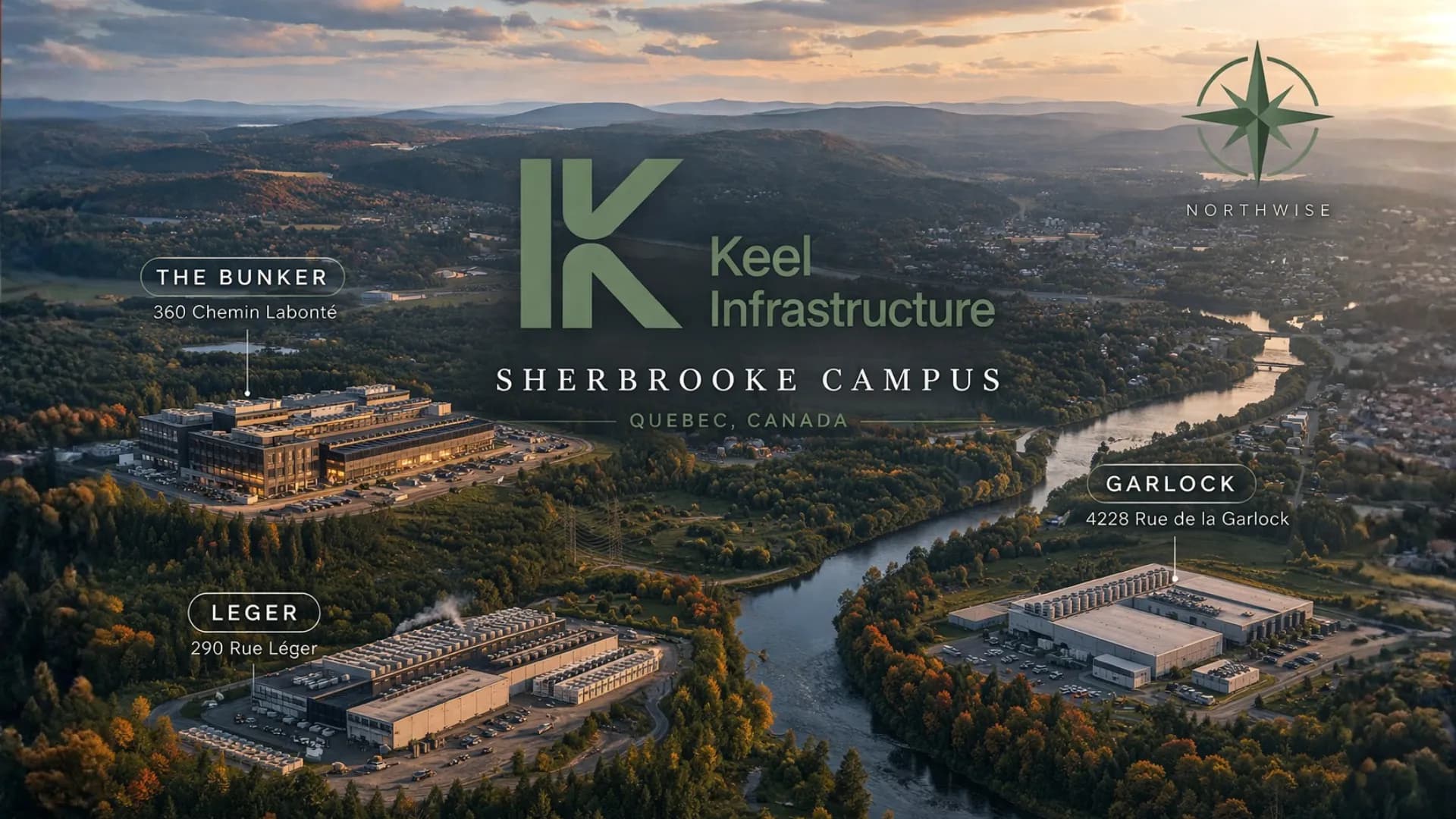
Sherbrooke: the conditional consolidation of existing 96 MW into one planned AI campus, land conditions and 2028 service target.
In this article
Sherbrooke's current AI development plan is a consolidation of existing power into a new campus. It is not simply the old Bunker, Leger and Garlock mining buildings receiving new racks, and it is not an additional 96 MW layered on top of their existing allocation.
In July, Keel announced municipal approval for arrangements to transfer and operate 96 MW at one prospective site, alongside a conditional land purchase. Provincial approval and the land conditions remained part of the development path.
Use the Keel Data Center Tracker to view the broader footprint. The new Keel model report separately examines the timing and economics of the company's transition.
One planned campus, using existing power
Keel's July 15 announcement says the Hydro-Sherbrooke agreement would consolidate power from three current mining sites into one 96 MW campus. The company did not request additional power. The transfer remained subject to review and approval by Quebec's Ministry of Economy, Innovation and Energy. Keel's Sherbrooke announcement.
That is the central change from the earlier study. The operating histories and mining configurations of Bunker, Leger and Garlock describe the legacy portfolio. They do not establish the floor plan, cooling system or tenant configuration of the proposed consolidated facility.
The land transaction is conditional
The same announcement describes a purchase agreement subject to inspections, feasibility analysis and municipal approvals, with closing expected in the first quarter of 2027. An agreement to purchase is a meaningful step, but it is not evidence that the transaction has already closed.
The conditions also explain why the final property configuration should not be inferred from the old mining-site descriptions. The new campus must be evaluated on its own land, utility and construction evidence.
The service target is 2028
Keel's August presentation places Sherbrooke's earliest ready-for-service year at 2028. That target is distinct from both the expected land closing and the power-transfer approval. Keel Q2 presentation.
The development sequence requires the conditions to be satisfied, the power arrangement to become effective and the physical facility to be completed. Equipment installation and tenant acceptance then determine when the location can support customer workloads.
Existing mining infrastructure does not define AI readiness
Mining and AI facilities can share a need for substantial electrical supply while differing in networking, reliability and cooling requirements. A power allocation can therefore be valuable without making the old buildings immediately suitable for the new use.
The earlier study proposed Garlock as an initial retrofit pilot and inferred how the other sites could follow. That was an analytical interpretation of the older configuration. The announced consolidation provides a different factual basis for the current project and replaces that retrofit sequence in this guide.
What to watch
The next useful evidence is provincial approval, satisfaction of the land conditions, a confirmed campus design and a commercial agreement. Each would reduce a different uncertainty. None should be assumed from the municipal announcement alone.
Sherbrooke remains an important potential use of an existing allocation. Its progress should be measured through the new project's milestones, with the legacy sites retained as historical context. The Keel company page links to the wider research. Reviewed through September 17, 2026.
KEEL Stock Forecast 2030: The Price of Patience
KEEL’s 2030 forecast follows five AI infrastructure sites through construction, tenant acceptance, debt, dilution and the cash left for shareholders.
KEEL Scrubgrass Site Analysis
Scrubgrass: legacy generation, the potential 1.3 GW campus and the power, environmental and commercial work still required.
KEEL Sharon PA Data Center
Sharon: the 110 MW gross development, delivered transformers, permitting progress and the path to a signed tenant lease.
Northwise Portfolios
See how the research becomes real decisions
Reader discussion
Discuss the research
Create a Free account to join the discussion with a display name.
Create a Free Account
No comments yet. Start a thoughtful discussion.